10 Crore Addiction-Free Pledge Mega Campaign | IIMT University
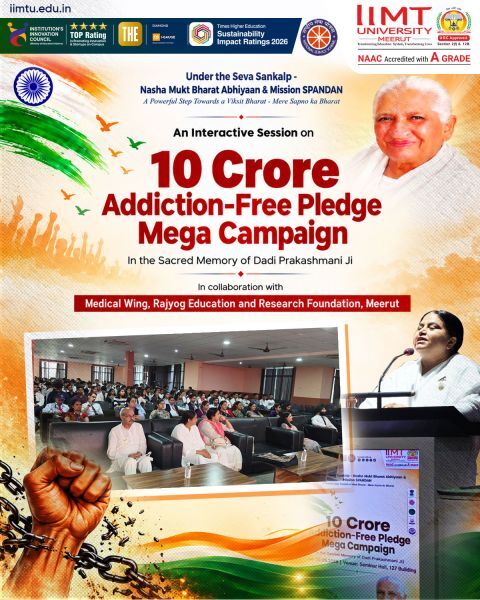
IIMT University organized an impactful awareness session under the 10 Crore Addiction-Free Pledge Mega Campaign on 23 September 2026, in collaboration with the Medical Wing of the Rajyog Education and Research Foundation, Meerut. The initiative aimed to educate students about the psychological and social consequences of addiction, encourage healthy lifestyle choices, and inspire young people to contribute to building an addiction-free society.
IIMT University Organizes 10 Crore Addiction-Free Pledge Mega Campaign
As part of its commitment to student development, social responsibility, and holistic education, IIMT University organized an interactive awareness session focused on the 10 Crore Addiction-Free Pledge Mega Campaign. The programme was conducted in collaboration with the Medical Wing of the Rajyog Education and Research Foundation, Meerut, to promote addiction prevention and encourage students to make responsible choices.
The campaign highlighted the importance of creating an environment where young people can discuss addiction-related concerns openly, understand the consequences of substance use, and seek appropriate guidance. The initiative reinforced the role of educational institutions in promoting personal responsibility, emotional well-being, and healthy lifestyle practices.
Brahma Kumari Shweta Ji Leads an Insightful Session on Addiction Awareness
The awareness session was led by Brahma Kumari Shweta Ji, Rajyoga Teacher, Meerut Branch, who engaged students in an informative discussion on addiction, its underlying psychological factors, and practical approaches to prevention.
She explained that addiction can affect physical health, emotional well-being, relationships, academic performance, and decision-making. Students were encouraged to develop self-awareness, manage stress constructively, strengthen their decision-making skills, and build the confidence to resist negative peer pressure.
The session also emphasized positive thinking, self-discipline, and a clear sense of purpose as important elements of a healthy and balanced lifestyle.
Understanding the Psychological Factors Associated with Addiction
One of the key highlights of the campaign was the discussion on psychological factors associated with addiction. Understanding these factors helps students recognize warning signs, make informed decisions, and seek timely support when needed.
Addiction can develop through a complex interaction of biological, psychological, social, and environmental influences. Stress, emotional difficulties, social pressure, and repeated exposure to addictive substances may increase vulnerability. The session encouraged students to develop healthy coping mechanisms and maintain supportive relationships.
Students were also encouraged to understand that seeking professional assistance is a positive step when someone experiences difficulty controlling substance use.
Awareness of Intoxicants and Their Impact on Young People
The programme addressed different forms of intoxicants and the potential risks associated with their use. Students were encouraged to recognize that tobacco, alcohol, and other psychoactive substances can affect physical health, mental well-being, academic engagement, and personal relationships.
The discussion highlighted the importance of making informed decisions rather than being influenced by curiosity, misinformation, social expectations, or peer pressure. The central message was that prevention begins with awareness, informed decision-making, and the confidence to make healthy choices.
Role of Meditation and Self-Confidence in Addiction Prevention
Meditation and self-confidence formed important parts of the discussion. The session highlighted how mindfulness, meditation, and self-reflection may help individuals manage everyday stress and develop greater awareness of their thoughts and behaviours.
Rajyoga meditation emphasizes self-awareness, mental discipline, and positive thinking. These practices may complement healthy lifestyle habits and appropriate professional support. Self-confidence can also help students establish boundaries, resist harmful social pressure, and seek help when necessary.
Meditation and self-confidence can support well-being but do not replace professional assessment or evidence-based treatment when addiction is present.
Connecting Vedic Darshan with Scientific Developments
A distinctive feature of the awareness programme was its use of examples from Vedic Darshan and scientific developments to encourage students to think critically about their choices and responsibilities.
The discussion connected traditional perspectives on self-discipline, awareness, and balanced living with contemporary understanding of health, behaviour, and addiction prevention. Students were encouraged to evaluate information carefully and make choices that support long-term well-being.
Interactive Question-and-Answer Session Encourages Student Participation
The interactive question-and-answer session provided students with an opportunity to raise questions, clarify doubts, and understand addiction-related concerns through practical examples.
The discussion encouraged students to consider how peer pressure, stressful circumstances, daily habits, and personal decisions can influence behaviour. Participants were also encouraged to support positive choices among their peers and recognize when someone may need professional assistance.
400+ Students and 40+ Faculty Members Take the Addiction-Free Pledge
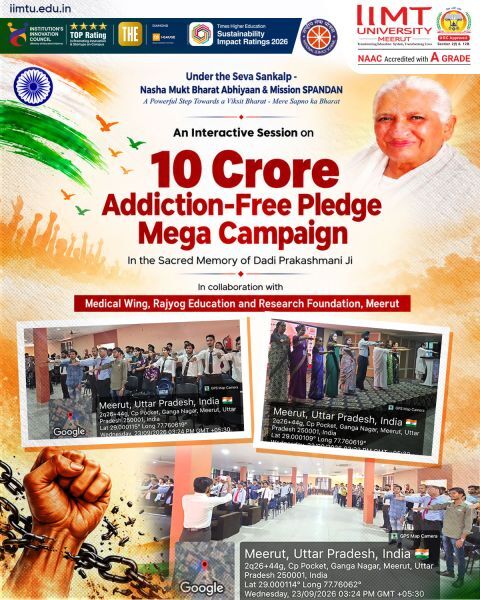
The programme concluded with a pledge ceremony led by Ms. Reena Yadav Ji, Rajyoga Meditation Practitioner. During the ceremony, more than 400 students and 40 faculty members pledged to remain addiction-free and spread awareness among others.
The ceremony represented a collective commitment to healthier habits, responsible decision-making, and a supportive campus community. Participants were encouraged to carry the message beyond the university by discussing addiction prevention with friends, families, and community members.
Importance of Addiction-Free Awareness Programmes in Universities
Universities provide an important platform for promoting health awareness, personal responsibility, and social well-being. Addiction awareness programmes help students understand the potential consequences of substance use and develop practical strategies for making healthier decisions.
Promoting Informed Decision-Making
Educational sessions help students understand substance-related risks and make decisions based on reliable information rather than misconceptions or social pressure.
Encouraging Healthy Coping Strategies
Discussions about stress management, meditation, exercise, constructive hobbies, and emotional awareness can introduce students to healthier ways of responding to everyday challenges.
Reducing Stigma Around Addiction
Open and respectful conversations can help students understand that addiction-related difficulties require appropriate support rather than discrimination or blame.
Strengthening Peer Awareness
Students can share accurate information with their peers and encourage positive behaviour within their social circles.
Encouraging Early Support
Awareness programmes can help students recognize when they or someone they know may need assistance and learn where to find appropriate counselling and healthcare resources.
IIMT University's Commitment to Student Development and Social Responsibility
The awareness session reflected IIMT University's emphasis on educational development, personal growth, and social responsibility. Universities contribute to society by providing academic knowledge and encouraging students to develop practical life skills and an understanding of their responsibilities towards others.
Collaboration with the Rajyog Education and Research Foundation provided an opportunity to bring specialized perspectives into campus discussions and encourage meaningful engagement between educational institutions and community organizations.
Building a Healthier and Addiction-Free Society Through Collective Action
Creating an addiction-free society is a shared responsibility that requires sustained awareness, supportive relationships, informed choices, and access to appropriate healthcare. Students can contribute by choosing healthy activities, avoiding harmful substances, sharing accurate information, and encouraging their peers to seek assistance when necessary.
Educational institutions can strengthen these efforts by promoting respectful dialogue, providing access to appropriate support services, and organizing awareness initiatives. Compassionate communication and reduced stigma can help individuals feel more comfortable seeking professional assistance.
The 10 Crore Addiction-Free Pledge Mega Campaign at IIMT University, organized on 23 September 2026 in collaboration with the Medical Wing of the Rajyog Education and Research Foundation, Meerut, was a meaningful initiative focused on addiction awareness and healthy living.
Led by Brahma Kumari Shweta Ji, the session explored psychological factors associated with addiction, different forms of intoxicants, preventive practices, meditation, self-confidence, and informed decision-making. The interactive question-and-answer session encouraged students to participate actively and learn through practical examples.
The programme concluded with a pledge ceremony led by Ms. Reena Yadav Ji, during which more than 400 students and 40 faculty members pledged to remain addiction-free and spread awareness among others.
Through this initiative, IIMT University reinforced the importance of awareness, personal responsibility, and collective action in building a healthier society. The programme encouraged participants to carry the message of addiction prevention beyond the campus and contribute to a future built on informed choices, positive habits, and supportive communities.
10-Oct-2026
Back