Awareness Can Be the First Step Towards Action: Understanding Human Trafficking
Human trafficking is one of the most serious violations of human rights, affecting individuals across communities, regions, and socioeconomic backgrounds. It is a complex issue that often remains hidden because exploitation can take place behind ordinary-looking circumstances, making awareness, education, and responsible action essential tools for prevention.
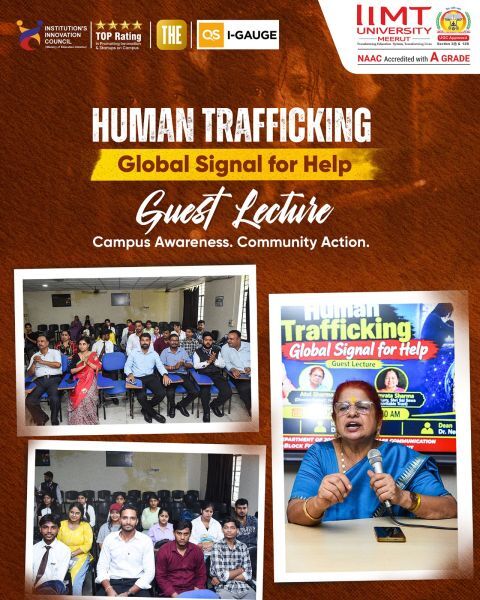
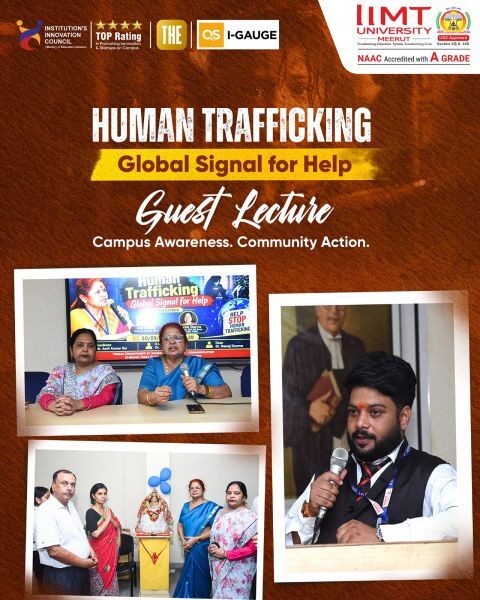
At IIMT University, we believe that education extends beyond classrooms, textbooks, and examinations. Education also means developing awareness about important social issues, understanding the challenges faced by vulnerable communities, and encouraging students to become responsible citizens. An insightful guest lecture on Human Trafficking provided an opportunity for students and faculty members to engage with this critical subject, understand the realities surrounding trafficking, recognise potential warning signs, and reflect on the role each individual can play in creating a safer society.
The central message is simple but powerful: awareness can be the first step towards action.
Understanding Human Trafficking and Its Realities
Human trafficking generally involves the recruitment, transportation, transfer, harbouring, or receipt of people through prohibited means for the purpose of exploitation. Exploitation may take different forms, including forced labour, sexual exploitation, domestic servitude, forced criminality, and other forms of abuse.
Trafficking does not always resemble the dramatic situations portrayed in films or television. In many cases, manipulation, deception, coercion, economic vulnerability, threats, or abuse of trust can be involved. Victims may be isolated from their families and communities, prevented from seeking help, or made to believe that they have no safe way to escape.
This complexity makes awareness particularly important. When we understand how trafficking can occur, we become better equipped to recognise circumstances that may require attention and appropriate intervention.
Why Human Trafficking Awareness Matters
Awareness is an important foundation for prevention. People who understand the basic indicators of trafficking are more likely to recognise potentially unsafe situations and respond responsibly.
Awareness can help communities understand:
- How traffickers may exploit vulnerability.
- Why false promises of employment or opportunity can create risks.
- How individuals may be controlled through threats, deception, or coercion.
- Why victims may not immediately ask for help.
- How isolation can make exploitation more difficult to identify.
- Why vulnerable individuals may require additional protection.
- How responsible reporting can contribute to safety and prevention.
A well-informed community is better positioned to protect vulnerable people without resorting to assumptions or harmful stereotypes.
Recognising Warning Signs of Human Trafficking
Recognising warning signs does not mean automatically identifying someone as a trafficking victim. Instead, it means understanding circumstances that may warrant concern and professional assistance.
Potential indicators can include restricted freedom of movement, signs of intimidation, unexplained fear, excessive control by another person, inconsistent explanations about employment or living arrangements, or situations in which an individual appears unable to make independent decisions.
In workplace settings, warning signs may include unusual restrictions, withheld wages or documents, unsafe working conditions, excessive working hours, or threats associated with leaving employment.
Among children and young people, sudden changes in behaviour, unexplained absences, unusual secrecy, inappropriate control by adults, or concerning online interactions may deserve attention.
However, no single sign proves trafficking. Context matters. We must avoid making accusations based solely on appearance, occupation, economic status, nationality, or personal circumstances. Concerns should be handled carefully and, where appropriate, communicated to trained authorities or organisations equipped to respond.
The Role of Education in Preventing Human Trafficking
Educational institutions have an important role in creating informed and socially responsible communities. Colleges and universities bring together young adults who are developing professional identities, social perspectives, and leadership skills.
A human trafficking awareness programme in a university environment can therefore go beyond simply presenting information. It can encourage students to think critically about exploitation, vulnerability, human rights, digital safety, ethical responsibility, and community participation.
At IIMT University, such discussions provide an opportunity to connect academic learning with real-world challenges. Students can learn that professional success and social responsibility are not separate concepts. The ability to identify injustice, communicate responsibly, support vulnerable individuals, and contribute positively to society is also part of meaningful education.
Human Trafficking Awareness and the Importance of Speaking Up
One of the strongest messages emerging from awareness initiatives is the importance of speaking up responsibly.
Silence can allow harmful situations to remain hidden. At the same time, careless confrontation or public accusations can place vulnerable individuals at greater risk. Responsible action means observing concerns carefully, avoiding direct confrontation when it could create danger, protecting privacy, and seeking assistance from appropriate authorities or trained organisations.
We can contribute by sharing reliable information, encouraging safe conversations, supporting awareness campaigns, and helping others understand that trafficking is a serious human rights issue.
Speaking up does not always mean taking dramatic action. Sometimes it begins with asking the right question, sharing accurate information, or ensuring that someone knows where professional help is available.
Protecting Children and Vulnerable Communities
Children and other vulnerable individuals can face increased risks of exploitation. Protection therefore requires awareness not only from individuals but also from families, educational institutions, workplaces, communities, and public authorities.
We can strengthen prevention by encouraging safe environments where children and young people feel comfortable discussing uncomfortable experiences. Digital awareness is also increasingly important because online platforms can be misused for manipulation, deception, grooming, recruitment, and exploitation.
Parents, teachers, mentors, and students can all contribute to safer environments by developing healthy communication habits and understanding responsible digital behaviour.
The objective should not be to create fear. Instead, it should be to develop confidence, awareness, critical thinking, and informed decision-making.
Human Trafficking in the Digital Age
Technology has transformed communication and access to opportunities, but it has also introduced new challenges. Social media, messaging platforms, online advertisements, and digital communities can potentially be misused by individuals seeking to exploit others.
False job opportunities, unrealistic financial promises, deceptive relationships, and requests for sensitive information can create serious risks.
This makes digital literacy an important part of human trafficking awareness. Students and young people should be encouraged to verify unfamiliar opportunities, question unrealistic promises, protect personal information, maintain appropriate privacy settings, and communicate with trusted adults or professionals when something feels unsafe.
Building a Culture of Awareness at Universities
Universities can create meaningful change by making social awareness part of campus culture. Guest lectures, workshops, discussions, student-led campaigns, poster exhibitions, seminars, awareness drives, and community outreach programmes can help transform complex issues into meaningful conversations.
At IIMT University, bringing students and faculty together for an insightful guest lecture on Human Trafficking reinforces the importance of learning through dialogue and real-world engagement.
Such programmes can encourage students to ask questions, challenge misconceptions, understand different perspectives, and think about practical ways to contribute to society.
The goal is not simply to attend a lecture and remember information for an examination. The greater objective is to ensure that awareness influences how we observe, communicate, respond, and participate as members of society.
From Awareness to Action
Awareness becomes meaningful when it encourages responsible action.
There are several ways in which we can contribute to preventing human trafficking:
- Learn from reliable sources and understand the realities of trafficking.
- Recognise potential warning signs without jumping to conclusions.
- Avoid spreading unverified information or identifying alleged victims publicly.
- Support safe and respectful conversations about exploitation and human rights.
- Encourage digital safety among children, students, families, and communities.
- Report genuine concerns through appropriate channels rather than attempting risky personal intervention.
- Support organisations and initiatives working to protect vulnerable communities.
- Promote dignity and equality in our workplaces, institutions, and communities.
- Challenge harmful stereotypes that can prevent victims from receiving support.
- Continue learning, because trafficking patterns and exploitation methods can evolve.
Even small actions can contribute to a broader culture of prevention when they are informed, responsible, and consistent.
Creating a Safer Society Through Collective Responsibility
Human trafficking cannot be addressed by one institution, one profession, or one section of society alone. Prevention requires collective responsibility.
Families can create safe communication environments. Schools and universities can provide awareness and education. Employers can promote ethical and lawful workplaces. Communities can remain attentive to vulnerability. Public institutions and law-enforcement agencies can respond through established mechanisms. Civil society organisations can provide specialised support and advocacy.
Students also have an important role. They are not merely recipients of information; they are future professionals, leaders, entrepreneurs, educators, administrators, researchers, and community members.
When students understand social issues and develop the confidence to respond responsibly, education can create an impact far beyond the university campus.
The Power of an Informed Community
A safer society begins with people who are willing to notice, learn, question, and respond.
Human trafficking often thrives where vulnerability is ignored and exploitation remains invisible. Awareness helps make the invisible visible. Education can help people understand warning signs, challenge misconceptions, and recognise that victims of trafficking deserve dignity, safety, protection, and support rather than judgement.
The IIMT University guest lecture on Human Trafficking reflects the value of creating spaces where important social issues can be discussed openly and responsibly. Such initiatives encourage students and faculty members to look beyond conventional academic boundaries and recognise their role in addressing challenges that affect society.
The message is not simply about knowing what human trafficking is. It is about developing the awareness necessary to recognise risks, the empathy necessary to understand vulnerability, and the responsibility necessary to respond appropriately.
Learn. Recognise. Speak Up. Stand Against Human Trafficking.
Awareness can be the first step towards action.
When we learn, we become informed.
When we recognise warning signs, we become more alert.
When we speak responsibly, we help create awareness.
When we stand against exploitation, we strengthen our commitment to human dignity.
At IIMT University, we continue to believe that education is not just about learning—it is about being aware, speaking up, and creating change.
Together, through knowledge, empathy, vigilance, and responsible action, we can contribute to building communities where dignity, safety, equality, and human rights are respected.
Learn. Recognise. Speak up. Stand against human trafficking.
11-Sep-2026
Back