IIMT University Celebrates World Mental Health Day with Awareness Sessions on Emotional Well-Being and Mental Health
Mental health is an essential part of overall well-being, influencing how we think, feel, communicate, make decisions, and respond to everyday challenges. Recognising the importance of emotional wellness in academic and personal life, IIMT University organised awareness sessions to mark World Mental Health Day, promoting mental health awareness, encouraging open conversations, and fostering a compassionate and supportive campus environment.
The initiative was organised by the Mental Health and Well-Being Committee of IIMT University, in collaboration with the Department of Psychology, School of Humanities and Management Communication (SoHMC). Through meaningful awareness activities conducted over two days, the university reaffirmed its commitment to creating an environment where mental health receives the same attention, care, and understanding as physical health.
World Mental Health Day Celebration at IIMT University
World Mental Health Day serves as an important reminder that mental health is a fundamental aspect of human well-being. The day encourages educational institutions, organisations, and communities to promote mental health awareness, challenge misconceptions, and support people experiencing emotional or psychological difficulties.
At IIMT University, the World Mental Health Day celebrations highlighted the importance of creating a supportive atmosphere where individuals feel comfortable discussing their emotions, expressing concerns, and seeking appropriate guidance when needed.
We emphasised that mental health involves more than the absence of mental illness. It also includes emotional resilience, healthy relationships, stress management, self-awareness, and the ability to navigate everyday challenges.
Day 1: Promoting Mental Health Awareness and Breaking the Stigma
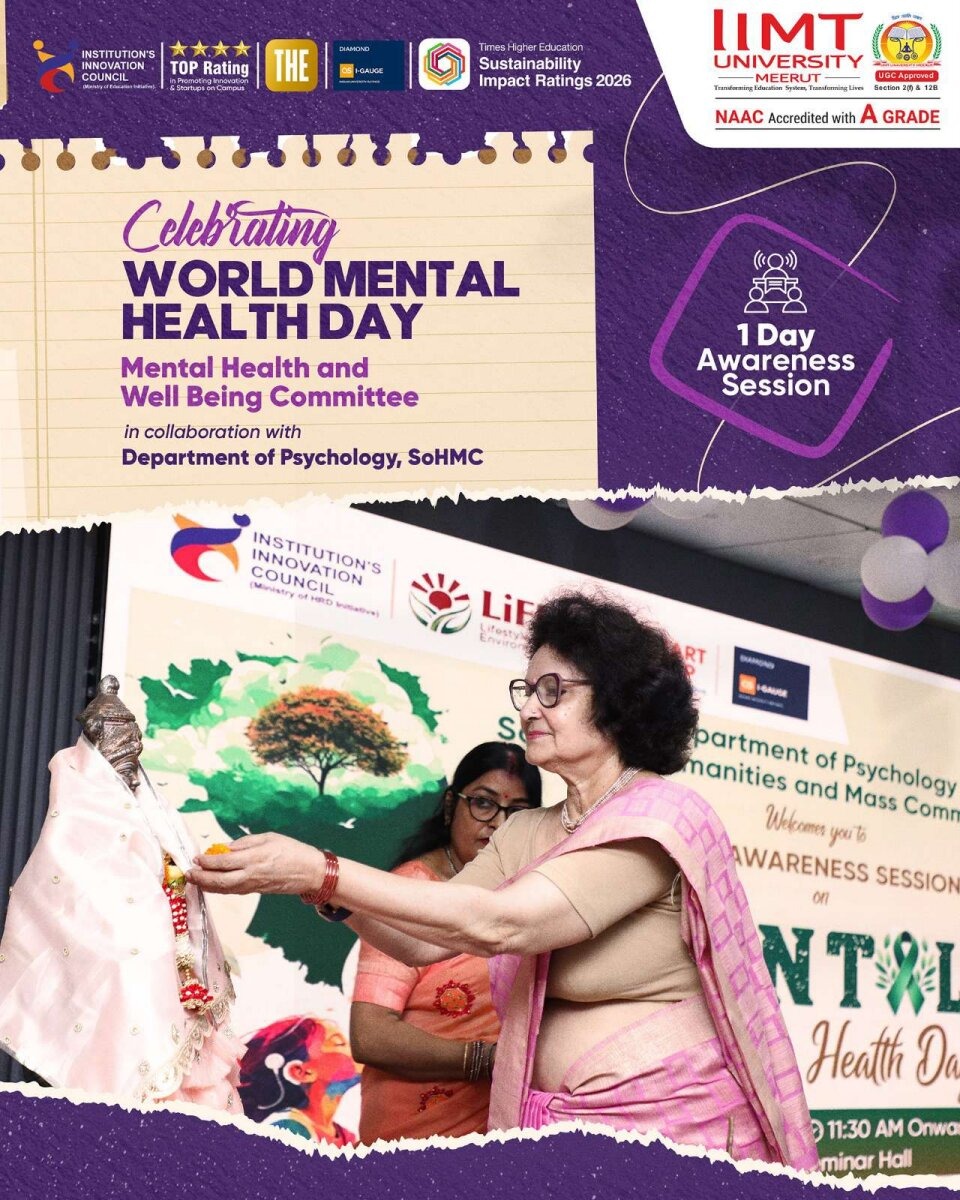
The first day of the World Mental Health Day celebrations at IIMT University featured an awareness session organised by the Mental Health and Well-Being Committee in collaboration with the Department of Psychology, SoHMC.
The session focused on building awareness about mental health and encouraging individuals to approach emotional well-being with sensitivity and understanding. It highlighted the importance of creating spaces where people can express their feelings without fear of judgment or discrimination.
Through the Day 1 initiative, we reinforced the message that mental health deserves understanding, acceptance, and timely attention. Open dialogue can help individuals recognise that experiencing stress, anxiety, sadness, or emotional difficulty does not make anyone weak.
The initiative represented a meaningful step towards building a campus culture in which students and members of the university community feel valued, respected, and supported.
Day 2: Nurturing Emotional Well-Being and Building a Supportive Campus
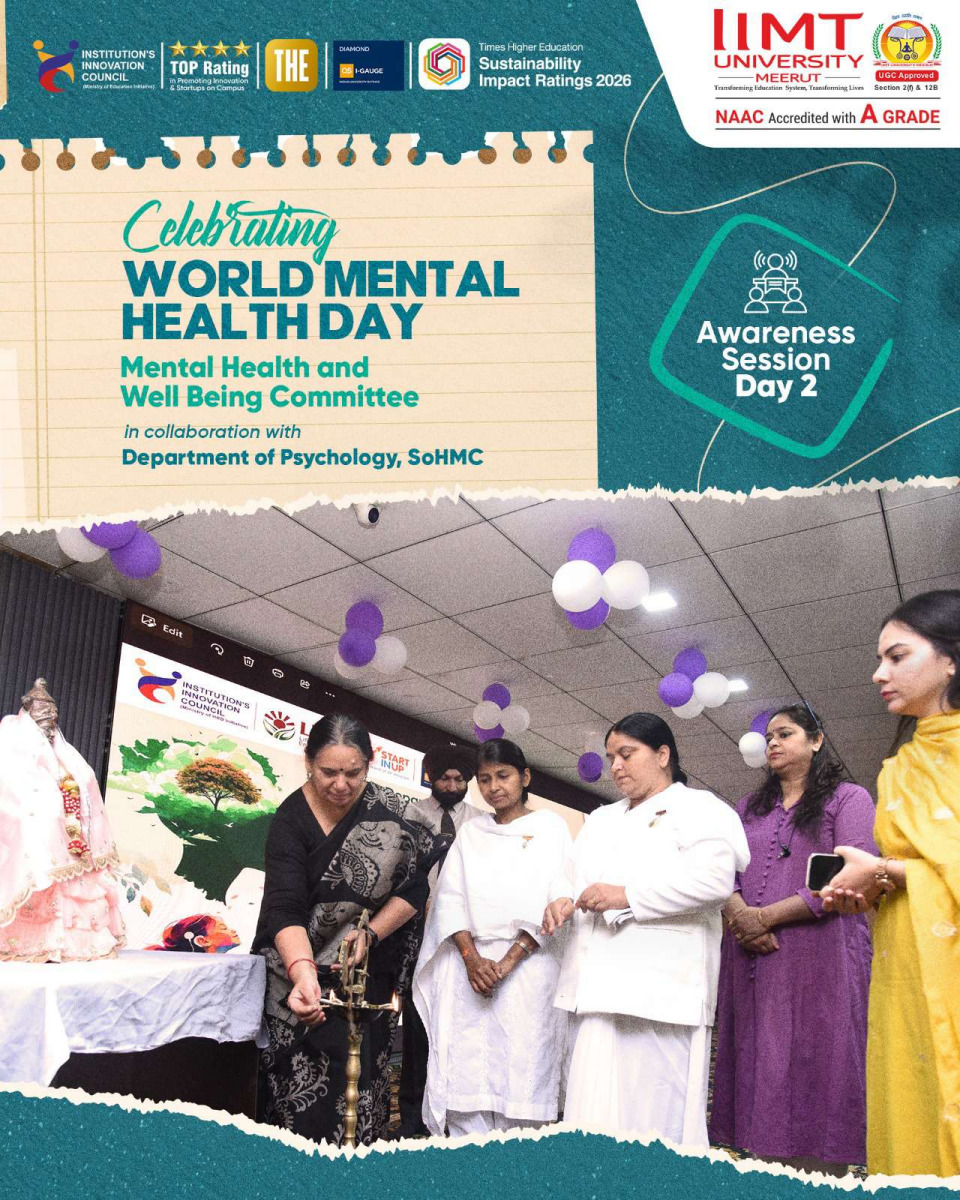
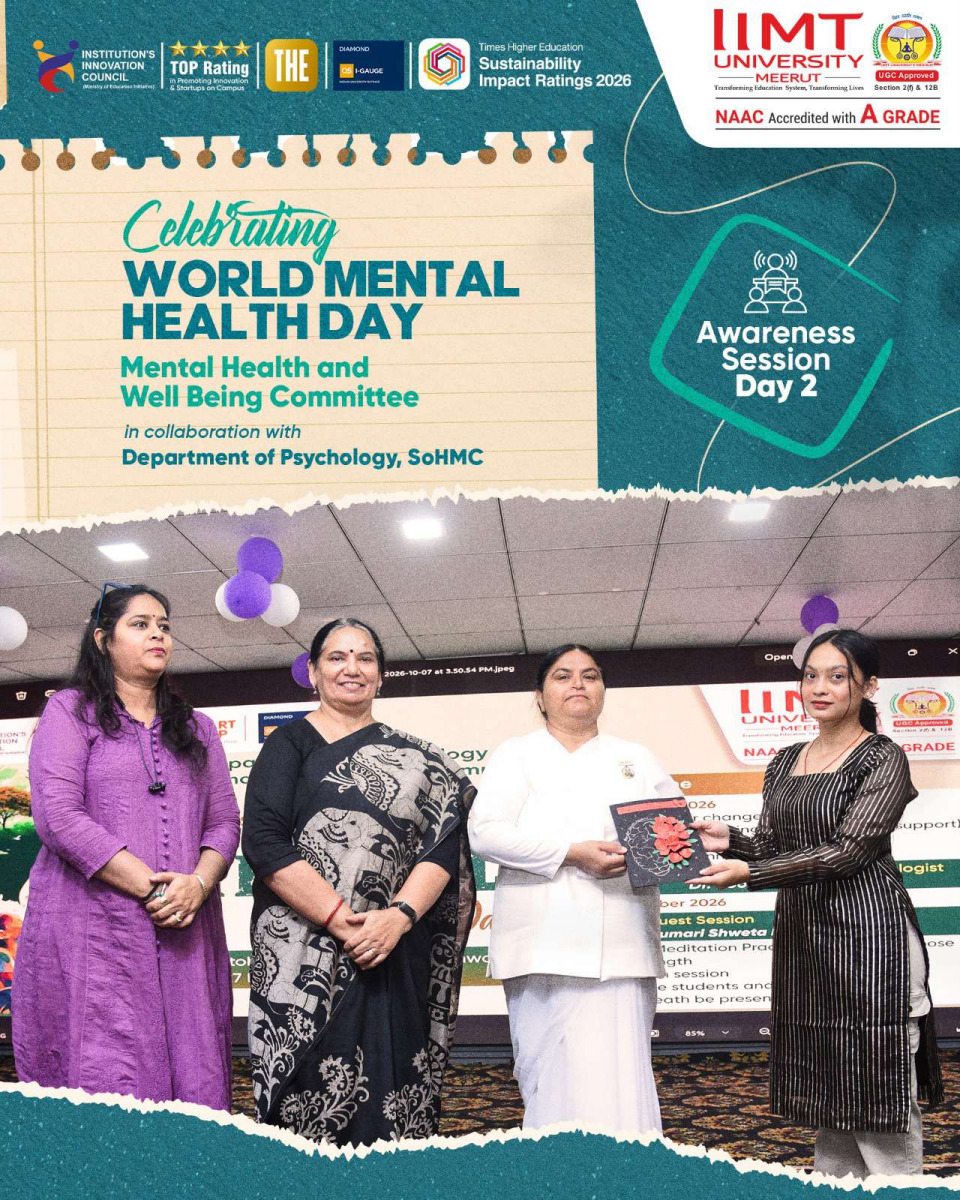
Continuing the awareness initiative on Day 2, IIMT University's Mental Health and Well-Being Committee, in collaboration with the Department of Psychology, SoHMC, hosted another session dedicated to emotional well-being and the importance of maintaining a healthy mind.
The second day extended the central message of the celebrations by encouraging greater attention to emotional health and the development of a compassionate environment. It reinforced the understanding that mental well-being requires ongoing awareness, meaningful conversations, and a willingness to support others.
For students navigating academic and personal responsibilities, understanding emotional well-being can be especially valuable. Recognising stress, maintaining healthy routines, communicating concerns, and seeking support can contribute to a more balanced educational experience.
The Day 2 session emphasised that a healthy mind deserves the same care and attention as a healthy body.
Importance of Mental Health Awareness Among University Students
University life is a significant stage of personal, academic, and professional development. Students encounter new responsibilities, changing social relationships, demanding academic schedules, and important decisions about their future.
Mental health awareness among students helps individuals understand their emotional needs and recognise when additional support may be beneficial. It also encourages them to develop practical habits that support psychological well-being.
1. Managing Academic Stress
Assignments, examinations, presentations, deadlines, and academic expectations can sometimes become overwhelming. Healthy study habits, realistic planning, regular breaks, adequate sleep, and constructive communication can help students manage their responsibilities.
2. Developing Emotional Resilience
Emotional resilience involves adapting to challenges, responding constructively to setbacks, and recovering from difficult experiences. Mental health awareness can help students understand that setbacks are a normal part of life and that asking for assistance is a positive step.
3. Encouraging Healthy Relationships
Supportive relationships with friends, classmates, teachers, family members, and mentors can contribute to a stronger sense of connection. Open communication and mutual respect allow individuals to express concerns and feel understood.
4. Recognising the Importance of Seeking Help
Mental health awareness encourages individuals to seek appropriate support without shame. Recognising when professional guidance may be needed is an important aspect of responsible self-care.
Breaking the Stigma Surrounding Mental Health
One of the most important objectives of mental health awareness is to challenge the stigma associated with psychological difficulties. Misconceptions can prevent individuals from openly discussing their experiences or seeking professional assistance.
At IIMT University, the World Mental Health Day awareness sessions highlighted the importance of changing these perceptions through education, empathy, and open communication.
Breaking mental health stigma begins with recognising that emotional difficulties can affect people from all backgrounds. It also requires us to listen without judgment, avoid making assumptions, and respond with sensitivity.
Creating a stigma-free environment requires consistent effort rather than a single awareness event. Educational institutions can contribute by promoting accurate information, encouraging respectful discussions, and making support resources easier to access.
Role of the Mental Health and Well-Being Committee at IIMT University
The Mental Health and Well-Being Committee plays an important role in bringing attention to psychological wellness and encouraging a supportive campus environment.
Collaborative initiatives involving the committee and the Department of Psychology, SoHMC, create opportunities to connect mental health awareness with the broader educational experience. Such efforts encourage students to understand emotional well-being as an essential component of personal development.
By promoting awareness, empathy, and responsible support, IIMT University reinforces the importance of a campus culture where individuals feel respected and encouraged to seek guidance when required.
Building a Compassionate and Inclusive Campus Environment
A healthy educational environment supports more than academic achievement. It also recognises the importance of emotional safety, respectful relationships, inclusion, and a sense of belonging.
- Open communication: Encouraging respectful conversations about emotional well-being.
- Empathy and understanding: Listening to others without making assumptions or dismissing their experiences.
- Mental health education: Promoting accurate information about emotional health and stress.
- Respectful interactions: Creating an environment in which students feel valued.
- Appropriate guidance: Helping individuals identify suitable institutional or professional support.
- Collective responsibility: Recognising that a supportive environment depends on the entire university community.
Practical Ways to Support Mental Health and Emotional Well-Being
Maintain a Balanced Routine
A consistent daily routine can help individuals manage responsibilities and create time for rest, recreation, and personal interests.
Prioritise Sleep and Physical Activity
Adequate sleep and regular physical activity are important components of general health. They can also support mood, energy, and the ability to manage daily demands.
Build Supportive Connections
Speaking with trusted friends, family members, teachers, mentors, or counsellors can help individuals feel less isolated when facing challenges.
Recognise Emotional Changes
Paying attention to persistent stress, changes in mood, difficulty concentrating, or disruptions to everyday functioning can help individuals recognise when additional support may be beneficial.
Seek Professional Guidance When Needed
When emotional difficulties persist or begin to interfere with daily life, consulting a qualified mental health professional can be an important step.
Practise Self-Compassion
Treating oneself with patience rather than harsh self-criticism can support a healthier response to setbacks, uncertainty, and difficult emotions.
Mental Health Awareness as an Ongoing Commitment
The World Mental Health Day celebrations at IIMT University highlighted a message that extends beyond the two-day initiative: mental health deserves continuous attention, meaningful conversation, and collective understanding.
Awareness sessions provide opportunities to introduce important topics, challenge misconceptions, and encourage reflection. Their broader significance lies in how these messages influence everyday attitudes and interactions across the campus.
Through initiatives such as the Day 1 and Day 2 sessions, IIMT University emphasised the importance of compassion, emotional awareness, and a supportive campus culture.
The World Mental Health Day awareness sessions at IIMT University represented a meaningful effort to promote emotional well-being, encourage open conversations, and build a compassionate educational environment.
Organised by the Mental Health and Well-Being Committee in collaboration with the Department of Psychology, SoHMC, the two-day initiative highlighted the importance of addressing mental health with the same seriousness and care given to physical health.
From breaking the stigma surrounding psychological difficulties to encouraging empathy and understanding, the sessions reinforced the value of creating spaces where individuals feel comfortable discussing their concerns and seeking appropriate support.
At IIMT University, the message remains clear: mental health deserves care, conversation, and compassion. By continuing to promote awareness, understanding, and respectful communication, we can contribute to a campus environment where well-being matters and every individual feels valued.
Because a healthy mind is an essential part of a healthy life, and every conversation about mental health brings us one step closer to a more compassionate world.
10-Oct-2026
Back