IIMT University Organises Guest Lecture on the Role of Financial Innovation in Transforming Personal Wealth Management
Financial innovation is reshaping the way individuals manage money, make investment decisions, plan their financial futures, and build long-term wealth. With the growing influence of digital technologies, emerging financial products, and evolving investment opportunities, understanding modern financial management has become increasingly important for students pursuing careers in commerce, finance, and management.
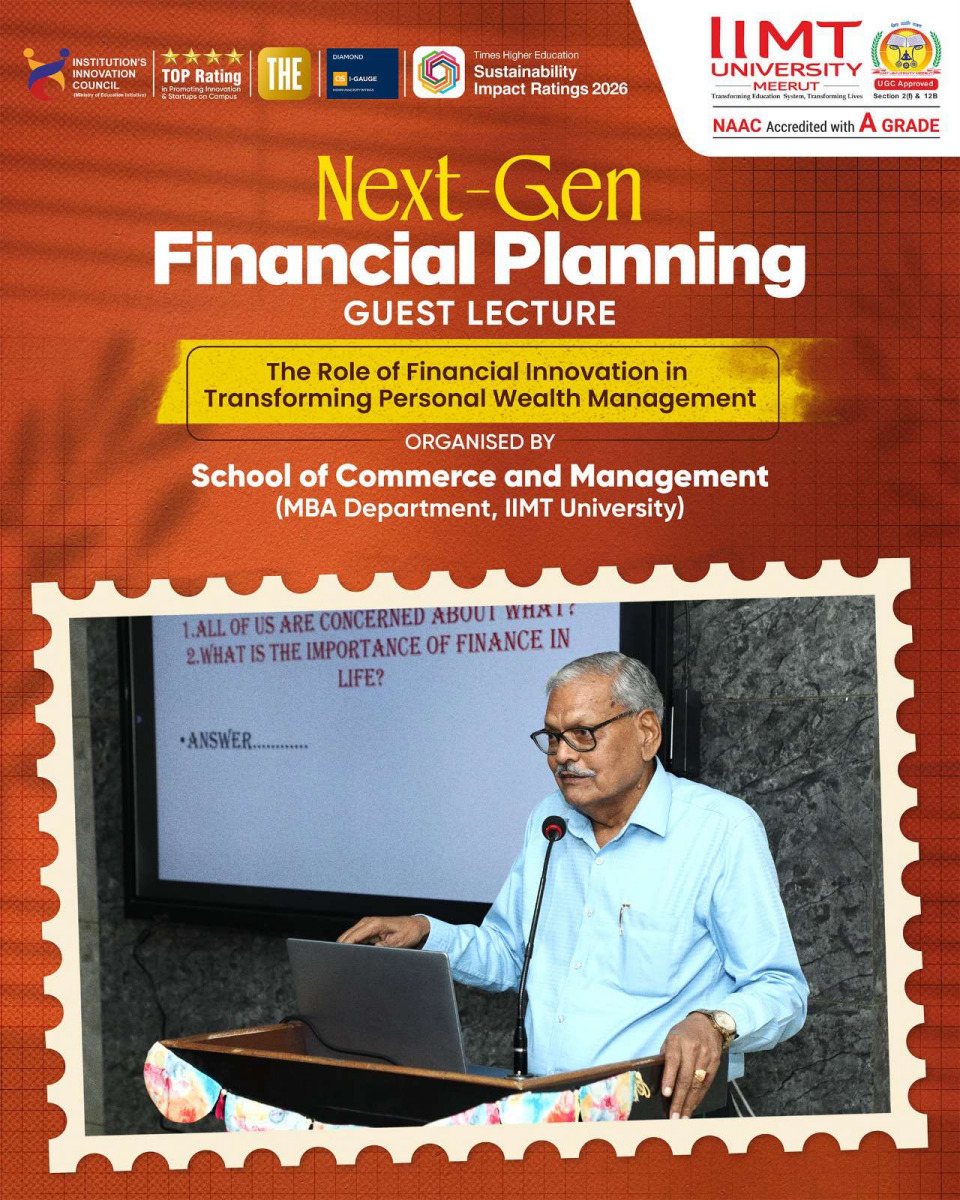
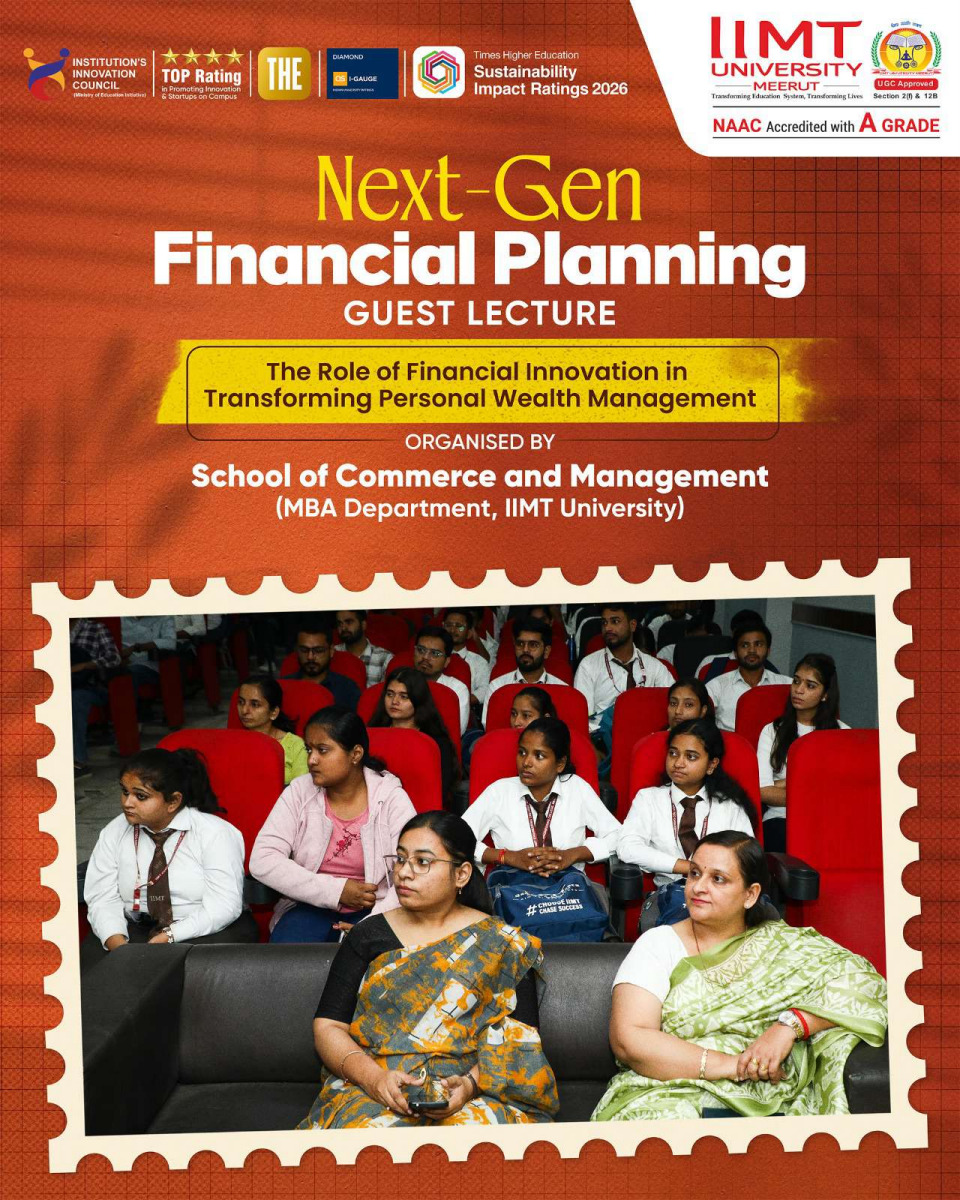
Recognising the importance of financial awareness and practical industry knowledge, IIMT University's School of Commerce and Management, MBA Department, organised an insightful guest lecture on "The Role of Financial Innovation in Transforming Personal Wealth Management." The session provided students with an opportunity to explore the changing landscape of personal finance and understand how financial innovation is influencing wealth creation, investment planning, and individual financial decision-making.
The guest lecture focused on the growing importance of informed money management in today's dynamic economic environment. It highlighted how innovative financial solutions, technology-driven services, and modern investment approaches are creating new opportunities for individuals to manage their financial resources more effectively.
Understanding the Role of Financial Innovation in Personal Wealth Management
Financial innovation has become a significant force in transforming the financial services industry. Traditional approaches to saving, investing, and managing personal finances are increasingly being complemented by digital platforms, advanced financial tools, and technology-enabled investment solutions.
During the session, students gained valuable insights into how financial innovation is changing the way individuals access financial services and make important monetary decisions. The discussion highlighted the importance of understanding modern financial systems and recognising the opportunities available through evolving financial practices.
Personal wealth management is no longer limited to saving money or investing in conventional financial instruments. It involves a comprehensive approach that includes financial planning, budgeting, investment diversification, risk assessment, tax planning, and long-term wealth creation.
Digital Transformation in the Financial Services Industry
One of the major developments in modern wealth management is the rapid digital transformation of financial services. Technology has made financial information, investment platforms, and banking services more accessible to individuals across different economic backgrounds.
Digital banking, mobile payment applications, online investment platforms, financial management applications, and automated advisory solutions are changing the way people interact with financial institutions.
- Digital Banking: Enables individuals to access banking services, monitor transactions, and manage accounts conveniently.
- Online Investment Platforms: Provide access to different investment opportunities and financial products.
- Mobile Payment Solutions: Simplify everyday transactions through secure digital payment systems.
- Financial Planning Applications: Help users track expenses, manage budgets, and monitor financial goals.
- Automated Financial Advisory: Uses technology-driven tools to support investment planning and portfolio management.
The discussion helped students recognise how digital financial solutions are making personal wealth management more accessible, efficient, and data-driven.
Importance of Financial Literacy Among Management Students
Financial literacy is an essential skill for students preparing to enter the professional world. Understanding financial concepts enables individuals to make informed decisions about their income, expenditure, savings, investments, and future financial responsibilities.
For MBA students, financial literacy is particularly important because it contributes to their understanding of business operations, financial markets, corporate decision-making, and economic developments.
The guest lecture emphasised the importance of developing a strong foundation in financial management. Students were encouraged to understand the relationship between financial knowledge and responsible decision-making.
- Understanding income, expenses, savings, and investments.
- Developing effective personal budgeting strategies.
- Evaluating different investment opportunities.
- Understanding financial risks and returns.
- Recognising the importance of investment diversification.
- Planning for short-term and long-term financial goals.
- Making informed decisions about personal financial resources.
Emerging Financial Technologies and Investment Opportunities
The financial sector is continuously evolving through technological advancements and innovative financial products. Emerging technologies are creating new possibilities for individuals seeking better ways to manage their money and investments.
Digital financial ecosystems, artificial intelligence-based financial tools, data analytics, and automated investment platforms are influencing how financial institutions provide services and how customers make financial decisions.
The guest lecture introduced students to the broader significance of these developments and their potential impact on personal wealth management.
Understanding emerging financial technologies is particularly relevant for future managers because technology is increasingly becoming an integral part of financial planning, investment analysis, and business strategy.
Investment Planning, Risk Management and Wealth Creation
Effective wealth management requires more than identifying profitable investment opportunities. It involves understanding individual financial objectives, assessing risk tolerance, and developing an investment strategy that supports long-term financial goals.
Investment planning plays an important role in helping individuals build financial security. Different financial instruments offer varying levels of risk, return, liquidity, and investment horizons.
A well-structured personal financial plan generally considers several important factors:
1. Financial Goal Setting: Individuals should establish clear financial objectives, such as purchasing a property, funding higher education, building retirement savings, or creating an emergency fund.
2. Investment Diversification: Diversification involves distributing investments across different financial instruments and asset classes to manage exposure to individual investment risks.
3. Risk Assessment: Understanding the relationship between risk and potential returns helps investors select financial products according to their financial circumstances and risk tolerance.
4. Long-Term Financial Planning: Consistent financial planning and disciplined investment practices can help individuals work towards sustainable wealth creation.
5. Regular Financial Review: Monitoring investments, reviewing financial goals, and adapting strategies to changing circumstances are important aspects of effective wealth management.
These concepts reinforced the importance of informed financial decisions and responsible investment practices.
Connecting Classroom Learning with Industry-Relevant Knowledge
At IIMT University, academic learning is strengthened through activities that expose students to practical perspectives and contemporary industry developments.
Guest lectures provide an effective platform for connecting theoretical concepts with real-world applications. They allow students to explore emerging professional trends, understand industry expectations, and gain insights into the practical challenges faced by professionals.
The guest lecture organised by the MBA Department reflected this approach by introducing students to the changing dimensions of personal wealth management and financial innovation.
Such academic interactions encourage students to think beyond conventional textbook knowledge and develop a broader understanding of the financial ecosystem.
Developing Future-Ready Financial and Management Professionals
The modern business environment requires professionals who possess a combination of analytical thinking, financial awareness, technological understanding, and decision-making abilities.
Financial innovation is creating new opportunities as well as new challenges for individuals, businesses, and financial institutions. Future managers must therefore understand how financial technologies influence consumer behaviour, investment decisions, and the delivery of financial services.
Through initiatives such as industry interactions, expert lectures, workshops, and practical learning sessions, IIMT University aims to provide students with opportunities to strengthen their professional understanding.
The session also highlighted the importance of developing a responsible approach towards personal finance. Financial discipline, awareness of market developments, and the ability to evaluate financial information are valuable capabilities for students entering an increasingly technology-driven economy.
IIMT University's Commitment to Experiential and Industry-Oriented Education
IIMT University, Meerut, continues to promote an academic environment that encourages students to develop practical knowledge, professional competence, and industry awareness.
The School of Commerce and Management plays an important role in preparing students for the evolving demands of the corporate and business sectors. Through its academic programmes, expert interactions, management activities, and experiential learning initiatives, the school provides opportunities for students to explore contemporary business practices.
The MBA programme focuses on developing managerial capabilities, analytical skills, leadership qualities, and an understanding of the business environment.
Guest lectures on relevant topics such as financial innovation and personal wealth management contribute to this learning experience by exposing students to developments that directly influence modern financial and business practices.
The guest lecture on "The Role of Financial Innovation in Transforming Personal Wealth Management", organised by the MBA Department of IIMT University's School of Commerce and Management, offered students valuable insights into the changing financial landscape.
The session highlighted the growing importance of digital financial services, financial literacy, investment planning, risk management, and informed money management. It also encouraged students to recognise the role of technology and innovation in shaping modern personal finance.
By providing exposure to contemporary financial practices, the initiative strengthened students' understanding of wealth management and its relevance in everyday life and professional development.
Through such knowledge-driven academic initiatives, IIMT University continues to encourage practical learning, financial awareness, and the development of future-ready management professionals.
30-Oct-2026
Back