National Conference on Artificial Intelligence in the Era of New Criminal Laws: A Paradigm Shift under BNS, BNSS & BSA
College of Law Hosts a Landmark National Conference on AI and the Future of Criminal Justice in India
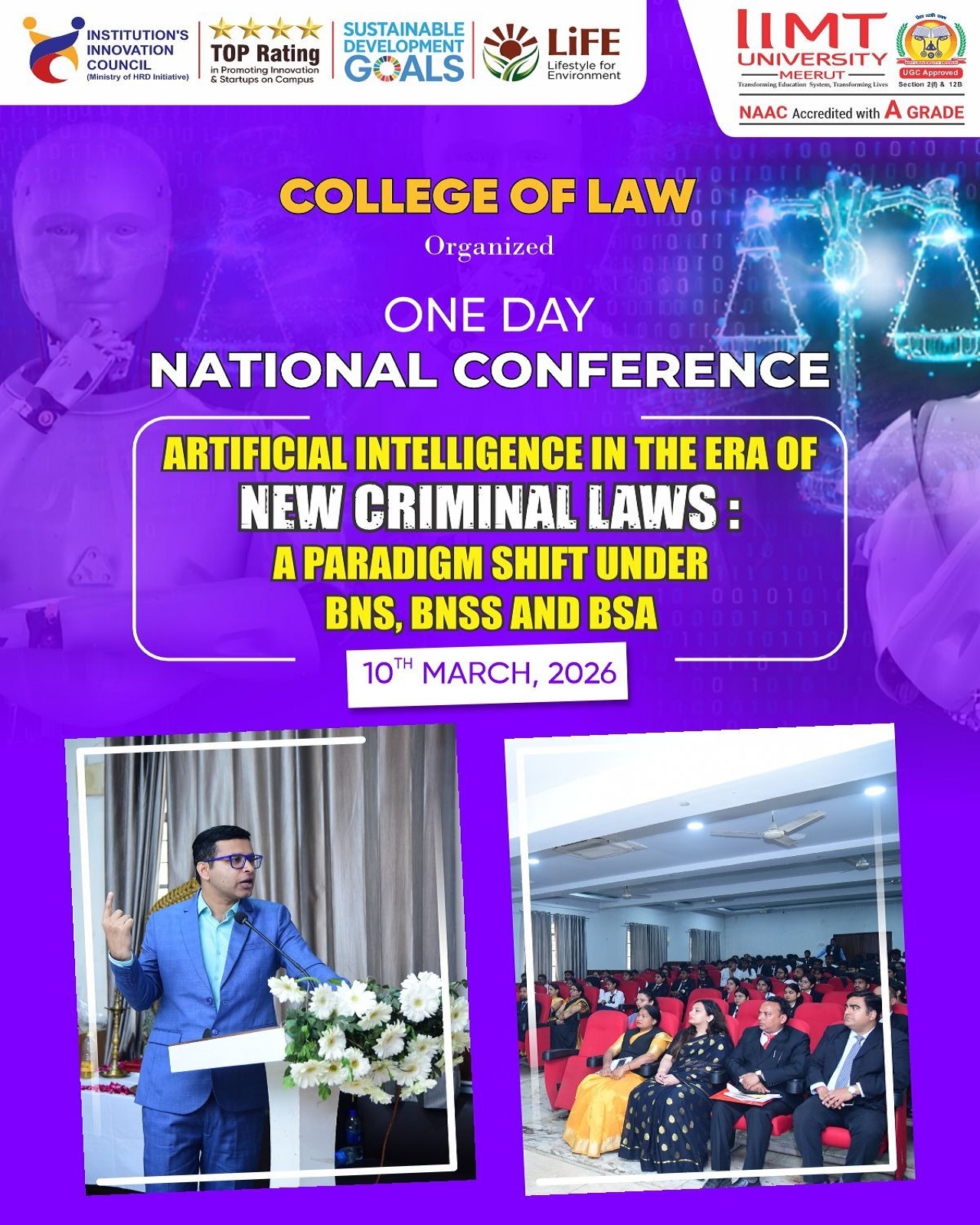
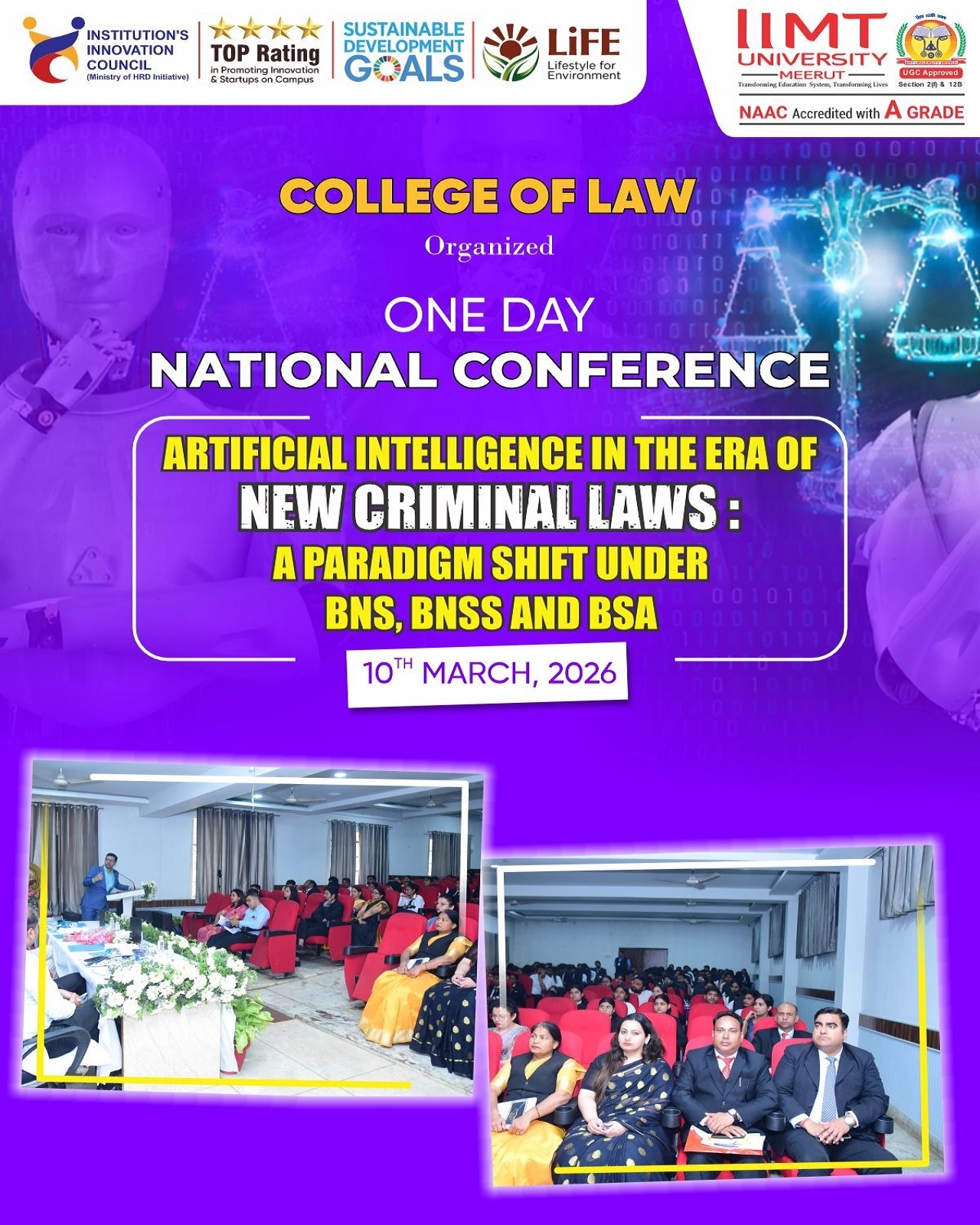
The College of Law successfully organized a prestigious One-Day National Conference on “Artificial Intelligence in the Era of New Criminal Laws: A Paradigm Shift under BNS, BNSS & BSA”, creating a dynamic platform for academicians, legal professionals, researchers, policymakers, judicial officers, and students to engage in meaningful discussions on the transformative impact of Artificial Intelligence (AI) on the Indian criminal justice system.
As India enters a new era of legal reforms through the implementation of the Bharatiya Nyaya Sanhita (BNS), Bharatiya Nagarik Suraksha Sanhita (BNSS), and Bharatiya Sakshya Adhiniyam (BSA), the conference highlighted the growing intersection between technological innovation and legal governance.
Understanding the Significance of AI in the New Criminal Law Framework
Artificial Intelligence is rapidly becoming one of the most influential technologies in modern governance and legal administration. Its integration into criminal justice systems worldwide has introduced unprecedented opportunities for efficiency, transparency, and accuracy.
With the introduction of India's new criminal laws, the legal landscape is undergoing a historic transformation. The conference focused on understanding how AI can complement these legislative changes by enhancing procedural efficiency while maintaining constitutional values, due process, and human rights protections.
Exploring the Impact of AI on Criminal Investigations
One of the central themes of the conference was the growing role of AI in criminal investigations. Experts discussed how machine learning algorithms, predictive analytics, and intelligent surveillance systems are revolutionizing investigative processes.
- Analyze large volumes of digital evidence.
- Detect cybercrime patterns.
- Identify suspicious financial transactions.
- Monitor organized criminal networks.
- Assist in forensic investigations.
- Improve facial recognition and biometric verification.
Discussions highlighted that under the framework of BNS and BNSS, technological evidence and digital investigations are likely to play an increasingly significant role.
Artificial Intelligence and Digital Evidence under Bharatiya Sakshya Adhiniyam (BSA)
The introduction of the Bharatiya Sakshya Adhiniyam (BSA) marks a major shift in the treatment of electronic and digital evidence within the Indian legal system.
The conference extensively examined the growing importance of:
- Electronic records
- Digital communications
- Cloud-based evidence
- Social media content
- AI-generated data
- Blockchain-based records
Experts emphasized the need for robust legal safeguards to ensure that AI-generated insights remain transparent, explainable, and admissible within judicial proceedings.
The Role of AI in Judicial Decision-Making and Court Administration
A major area of discussion centered on the use of AI within courts and judicial institutions. Around the world, courts are experimenting with AI-powered systems to improve administrative efficiency and case management.
- Legal research and case analysis
- Case scheduling and management
- Document review and drafting
- Judicial data analytics
- Court administration
- Access to legal information
The conference stressed that AI should function as an assistive tool rather than a replacement for judicial discretion.
Addressing Cybercrime in the Age of Artificial Intelligence
As technological advancement accelerates, cybercrime has become one of the most pressing challenges facing legal systems worldwide.
- AI-enabled fraud
- Identity theft
- Deepfake manipulation
- Online financial scams
- Cyber terrorism
- Data breaches
- Ransomware attacks
- Cryptocurrency-related crimes
AI can assist authorities in detecting suspicious behavior, predicting cyber threats, and enhancing cybersecurity frameworks.
Ethical and Legal Challenges of Artificial Intelligence in Criminal Justice
Algorithmic Bias
AI systems are only as reliable as the data used to train them. Biased datasets can produce discriminatory outcomes, potentially affecting investigations, arrests, and judicial processes.
Transparency and Explainability
Legal systems require accountability and reasoned decision-making. Participants stressed the need for explainable AI models that can withstand judicial scrutiny.
Privacy and Data Protection
The increasing use of AI often involves large-scale collection and analysis of personal information. Strong data governance frameworks are necessary to protect individual privacy rights.
Accountability for AI Decisions
Questions remain regarding responsibility when AI systems produce incorrect recommendations or outcomes. Legal frameworks must clearly define accountability mechanisms.
Human Oversight
Experts unanimously agreed that AI should augment, not replace, human decision-makers. Human oversight remains essential to ensure fairness, justice, and compliance with constitutional principles.
Academic Collaboration and Research Opportunities
The conference served as a vibrant platform for interdisciplinary collaboration among legal scholars, technology experts, criminologists, policymakers, and students.
- AI and constitutional law
- Smart policing initiatives
- Digital evidence management
- AI ethics and governance
- Criminal law reforms
- Cybersecurity regulations
- Emerging legal technologies
- Human rights implications of AI
Student Engagement and Capacity Building
A significant highlight of the conference was the enthusiastic participation of students and young researchers. Through interactive sessions, panel discussions, and scholarly presentations, students gained valuable insights into the practical and theoretical dimensions of AI in criminal law.
- Technological competence
- Critical legal reasoning
- Research and analytical skills
- Understanding of digital governance
- Knowledge of emerging legal technologies
The Future of Criminal Justice in India
India stands at a pivotal moment in its legal evolution. The implementation of BNS, BNSS, and BSA represents a significant step toward modernizing the criminal justice framework.
The National Conference underscored that the future of criminal justice will depend on a balanced integration of innovation and legal safeguards.
Conclusion
The National Conference on “Artificial Intelligence in the Era of New Criminal Laws: A Paradigm Shift under BNS, BNSS & BSA” organized by the College of Law successfully brought together leading voices from academia, the legal profession, and the student community.
By fostering meaningful dialogue on the intersection of Artificial Intelligence and India's new criminal laws, the conference highlighted both the opportunities and challenges that lie ahead.
10-Mar-2026
Back