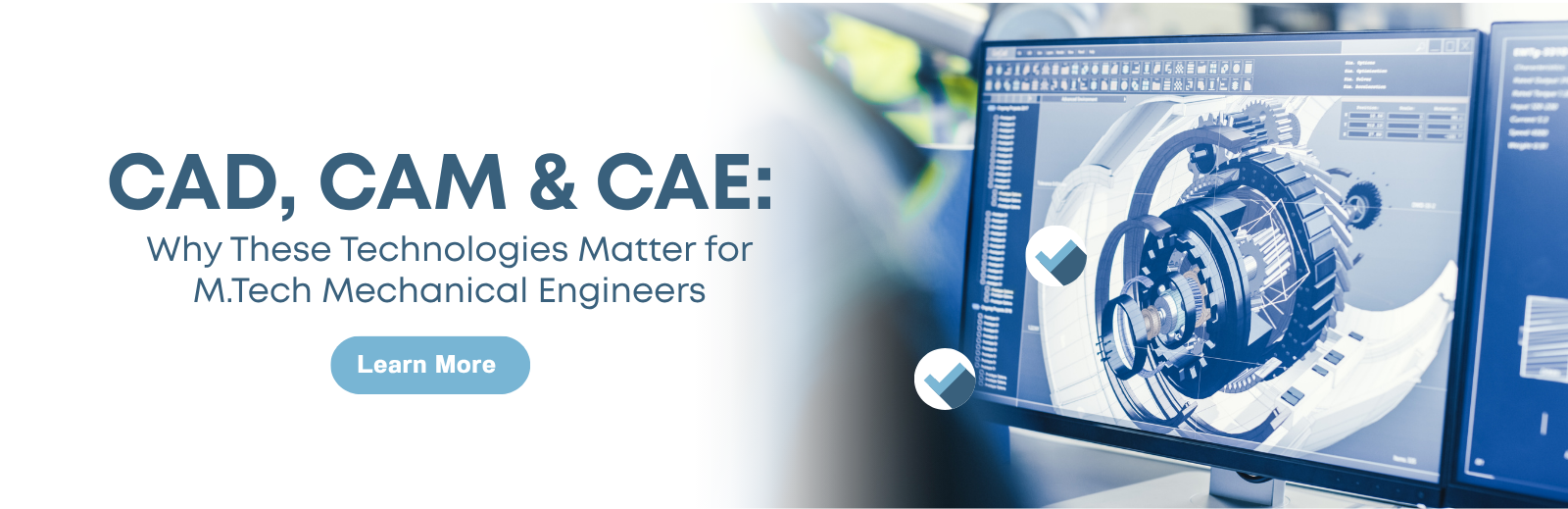
Walk into any modern mechanical engineering lab in 2026, and you’ll find far fewer drafting tables and far more workstations running simulation software. The shift from manual design to computer-driven engineering isn’t new, but its depth has changed dramatically and for anyone pursuing an M.Tech in Mechanical Engineering, fluency in CAD, CAM, and CAE isn’t optional anymore. It’s the baseline expectation from employers across manufacturing, automotive, aerospace, and industrial design.
Breaking Down CAD, CAM, and CAE
CAD (Computer-Aided Design) is the foundation software used to create precise 2D drawings and 3D models of components and assemblies. Tools like SolidWorks, AutoCAD, and CATIA let engineers visualize, modify, and validate designs long before a physical prototype is built, dramatically reducing development time and material waste.
CAM (Computer-Aided Manufacturing) takes CAD models and translates them into machine-readable instructions for CNC machining, 3D printing, and other automated manufacturing processes. It’s the bridge between digital design and physical production, and its role has only grown as manufacturing floors become increasingly automated.
CAE (Computer-Aided Engineering) covers simulation and analysis stress testing, thermal analysis, fluid dynamics, and structural validation, typically through tools like ANSYS or Abaqus. CAE lets engineers predict how a design will behave under real-world conditions without building a single physical prototype, catching flaws early and cutting both cost and risk.
Why These Skills Are Now Core to M.Tech Mechanical Engineering
1. Industry has fully digitized the design-to-production pipeline. From automotive OEMs to aerospace manufacturers, the entire product development cycle now runs through CAD-CAM-CAE workflows. Graduates without hands-on proficiency in these tools are at a real disadvantage in technical interviews and on-the-job performance.
2. Simulation reduces cost and speeds up innovation. Physical prototyping is expensive and slow. CAE-driven simulation allows companies to iterate designs digitally, dramatically cutting development timelines — a capability increasingly expected of every mechanical engineer, not just specialists.
3. It’s foundational for emerging fields. Electric vehicle component design, robotics, and advanced manufacturing (like additive manufacturing) all depend heavily on CAD-CAM-CAE integration, making these skills directly relevant to some of the fastest-growing sectors in Indian engineering.
4. Research and higher studies increasingly demand it. For students aiming at PhD tracks or R&D roles, CAE-based simulation skills are often a prerequisite for meaningful thesis work, since most modern mechanical research relies on computational modeling rather than purely physical experimentation.
What a Strong M.Tech Program Should Offer
When evaluating programs, look beyond the course title and check whether the curriculum actually includes:
- Dedicated CAD/CAM/CAE lab hours, not just theoretical coverage
- Industry-standard software licenses (SolidWorks, ANSYS, CATIA, or equivalent)
- Project-based learning tied to real manufacturing or design problems
- Faculty with industry or applied research experience in simulation and design tools
- Internship or industry collaboration opportunities that involve hands-on CAD-CAM-CAE application
Understanding M.Tech Admission
The general mtech admission process across most institutions follows a similar structure:
- Eligibility check — typically a B.Tech/B.E. in Mechanical Engineering or a closely related discipline with a minimum aggregate score
- Entrance exam or merit-based shortlisting — GATE scores are widely accepted, though many private universities also conduct their own entrance tests
- Counseling and document verification
- Fee payment and seat confirmation
- Orientation and lab induction, often including an early introduction to the department’s CAD-CAM-CAE software infrastructure
Top 10 Private M.Tech Universities in India for Mechanical Engineering (2026)
For students comparing private engineering universities in India, here’s a shortlist worth evaluating:
- BITS Pilani — India’s leading private engineering institute, with strong research depth in design and simulation.
- VIT Vellore — Known for well-equipped CAD-CAM-CAE labs and consistent placement outcomes.
- Manipal Institute of Technology (MIT Manipal) — Offers dedicated specializations in design and manufacturing engineering.
- Thapar Institute of Engineering and Technology, Patiala — A research-driven institute with strong publication output in mechanical simulation.
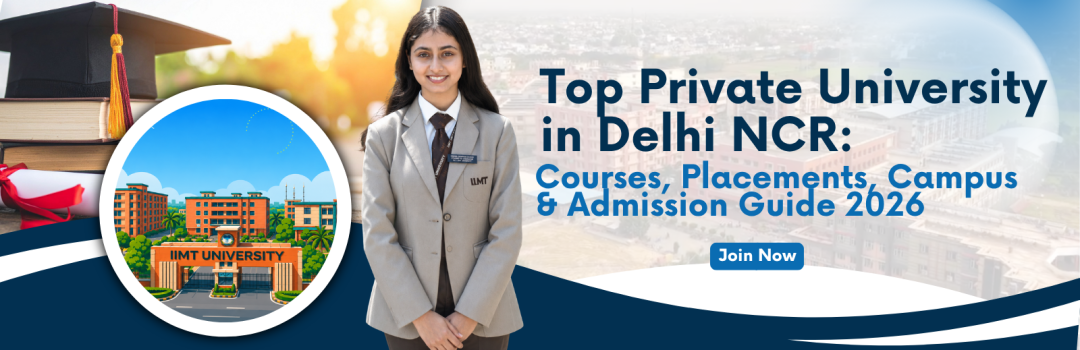
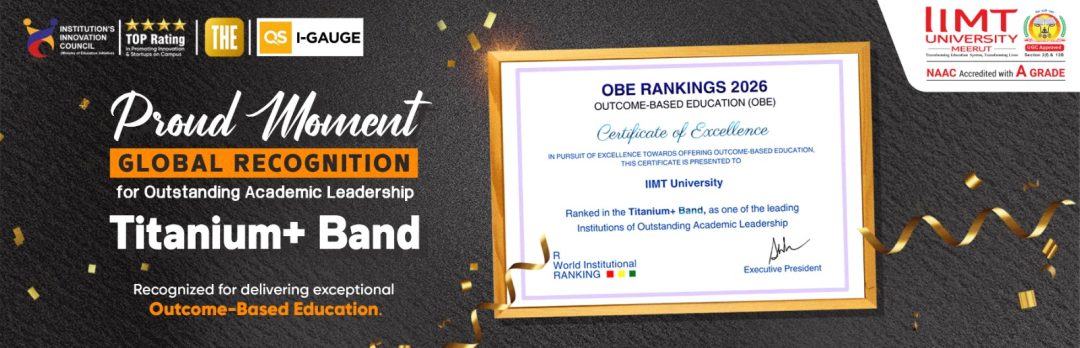
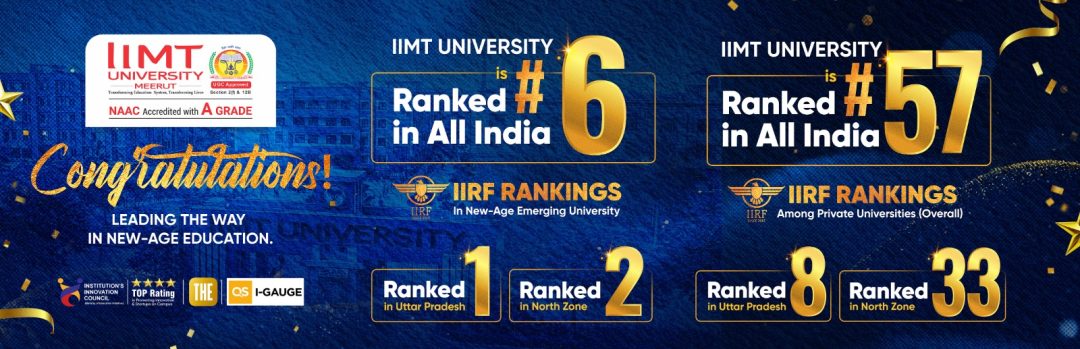
- IIMT University, Meerut — IIMT University’s M.Tech in Mechanical Engineering program is built around hands-on training in CAD, CAM, and CAE tools, supported by modern labs and an NEP-aligned, research-oriented curriculum. Backed by NAAC ‘A’ accreditation and recognized as a top ranking university in India through multiple 2026 rankings, IIMT University has become one of the top m.tech colleges in India among private universities for students seeking strong technical grounding and accessible admissions.
- SRM Institute of Science and Technology, Chennai — Offers specialized electives in advanced manufacturing and simulation-driven design.
- Lovely Professional University (LPU) — A large private campus with modern simulation labs and flexible M.Tech specializations.
- Amity University, Noida — Strong industry partnerships supporting applied CAD-CAM-CAE research.
- Chandigarh University, Mohali — Rapidly growing reputation for placements and updated design-engineering curriculum.
- SASTRA University, Thanjavur — Known for research-focused M.Tech programs with strong faculty mentorship in mechanical design.
Final Thoughts
CAD, CAM, and CAE aren’t optional add-ons to an M.Tech in Mechanical Engineering anymore, they’re the core toolkit modern mechanical engineers are expected to master, from EV component design to advanced manufacturing and structural simulation. Choosing a program with genuine lab infrastructure and industry-aligned software training matters as much as the university’s name recognition. Institutions like IIMT University, offering practical, technology-forward mechanical engineering education alongside strong placement support, are helping bridge the gap between classroom theory and the digitally-driven engineering workflows employers actually expect.