
A Master of Science degree used to mean one of a handful of predictable paths: physics, chemistry, mathematics, maybe biology. That’s no longer the full picture. As India’s research, healthcare, agriculture, and biotechnology sectors expand rapidly, MSc programs have diversified into far more specialized, industry-relevant tracks. For students weighing postgraduate options in 2026, understanding which MSc Specialisations actually align with where the job market is heading matters just as much as choosing a well-ranked institution.
Why MSc Specializations Are Diversifying
1. Biotechnology and life sciences are booming. India’s biotech sector has grown into a genuine innovation hub, driving strong demand for MSc graduates in biotechnology, microbiology, and related life sciences — fields that feed directly into pharmaceutical R&D, genomics, and agricultural biotechnology.
2. Agricultural science is modernizing fast. With India pushing toward precision agriculture and crop improvement, specializations like genetics and plant breeding, and horticulture, have moved from niche academic tracks to genuinely in-demand postgraduate qualifications tied to real industry and government research roles.
3. Data-driven science is reshaping traditional disciplines. Even classical subjects like statistics and mathematics now carry heavier computational and applied components, reflecting demand from analytics, fintech, and research roles that didn’t exist in the same form a decade ago.
4. Healthcare-adjacent sciences are expanding. Programs in nursing, food and nutrition, and allied health sciences are seeing rising enrollment as India’s healthcare infrastructure grows, creating research and clinical-support career paths beyond traditional lab-based science roles.
What Makes an MSc Program Genuinely Future-Ready
Not every MSc program keeps pace with industry needs. When evaluating options, look for:
- Updated, application-driven curricula rather than static, decades-old syllabi
- Research infrastructure — modern labs, access to journals, and faculty actively publishing in their field
- Industry and government research tie-ups that translate into internships, fieldwork, or applied projects
- Interdisciplinary flexibility — increasingly valuable as fields like biotechnology and data science overlap with traditional science disciplines
- Clear career outcomes — whether that’s a PhD pipeline, industry R&D roles, or teaching and civil service pathways
Understanding MSc Admission
The general MSc admission process across most Indian universities follows a fairly consistent structure:
- Eligibility check — typically a relevant B.Sc. degree with a minimum aggregate score in the corresponding subject area
- Entrance exam or merit-based shortlisting — some universities conduct their own tests, while others rely on graduation scores and a personal interview
- Counseling and document verification
- Fee payment and seat confirmation
- Orientation and lab/research induction, often including an early introduction to ongoing departmental research projects
Choosing the Best MSc Colleges in India
When comparing the best MSc colleges in India, students should weigh accreditation (UGC recognition, NAAC grading), faculty research output, lab infrastructure, and how well the specialization list matches emerging industry needs rather than defaulting to whichever college is most well-known for undergraduate programs. A top private university in India offering a genuinely broad and updated MSc portfolio, backed by credible institutional rankings, is often a stronger bet than a narrower, single-subject program at a less accountable institution.
All MSc Specializations Offered at IIMT University
IIMT University offers one of the more comprehensive MSc portfolios among private universities in the region, spanning multiple schools, the School of Basic Sciences and Technology, the School of Life Sciences and Technology, the School of Agricultural Sciences, and the School of Hotel Management, Catering, and Tourism. The university’s MSc offerings include:
- M.Sc. Mathematics
- M.Sc. Physics
- M.Sc. Chemistry
- M.Sc. Statistics
- M.Sc. Botany
- M.Sc. Zoology
- M.Sc. Microbiology
- M.Sc. Biotechnology
- M.Sc. (Ag) Horticulture
- M.Sc. Agriculture (Genetics and Plant Breeding)
- M.Sc. Home Science (Food and Nutrition)
- M.Sc. Nursing
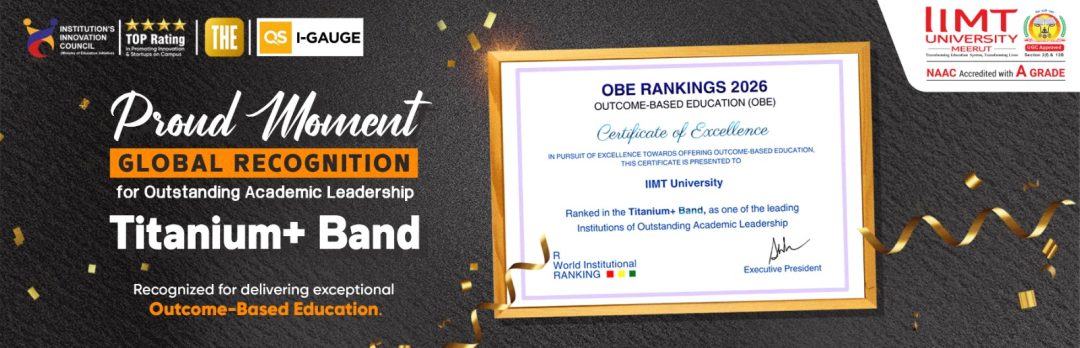
This breadth reflects the university’s positioning as a top ranking university in India, backed by NAAC ‘A’ accreditation and multiple 2026 rankings across innovation and academic quality, including its recognition in the WURI 2026 global rankings. Each program is designed with both theoretical depth and applied research exposure, preparing students for higher studies, government research roles, or industry careers depending on their chosen specialization.
(Note: Specialization availability and exact program names can be updated by the university between academic sessions prospective applicants should confirm the current list and eligibility criteria directly with IIMT University’s admissions office before applying.)
Final Thoughts
The MSc landscape in India has moved well past the traditional science-only mold, and choosing a program aligned with real industry trends biotechnology, agricultural genetics, applied statistics, or allied health sciences matters more than ever for long-term career outcomes. Universities like IIMT University, offering a genuinely diverse and research-oriented MSc portfolio across life sciences, basic sciences, and agriculture, are helping bridge the gap between traditional postgraduate science education and the specialized, industry-relevant careers students are increasingly aiming for in 2026.