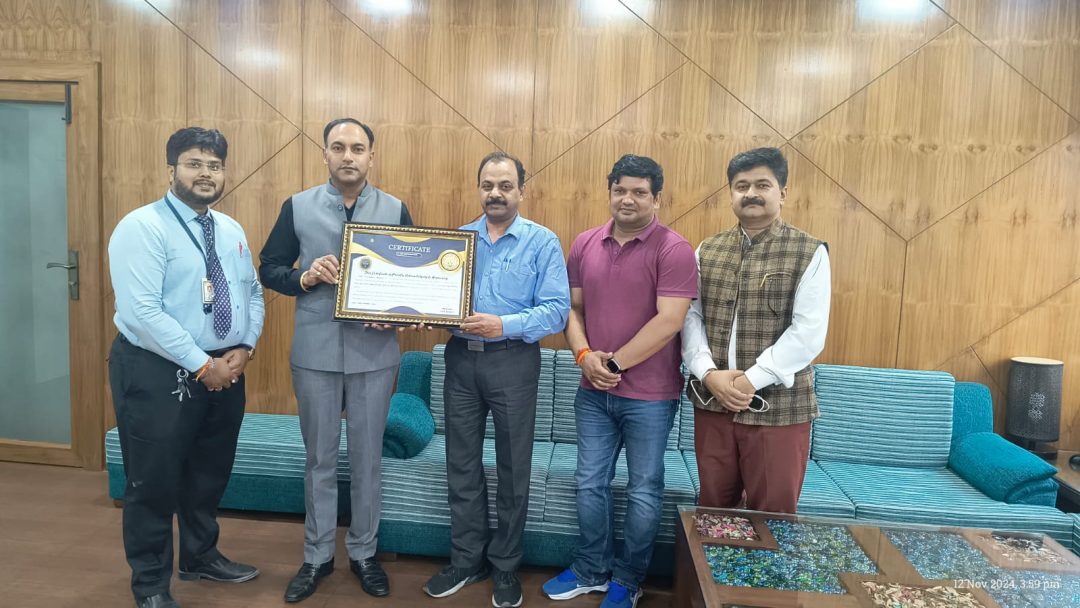
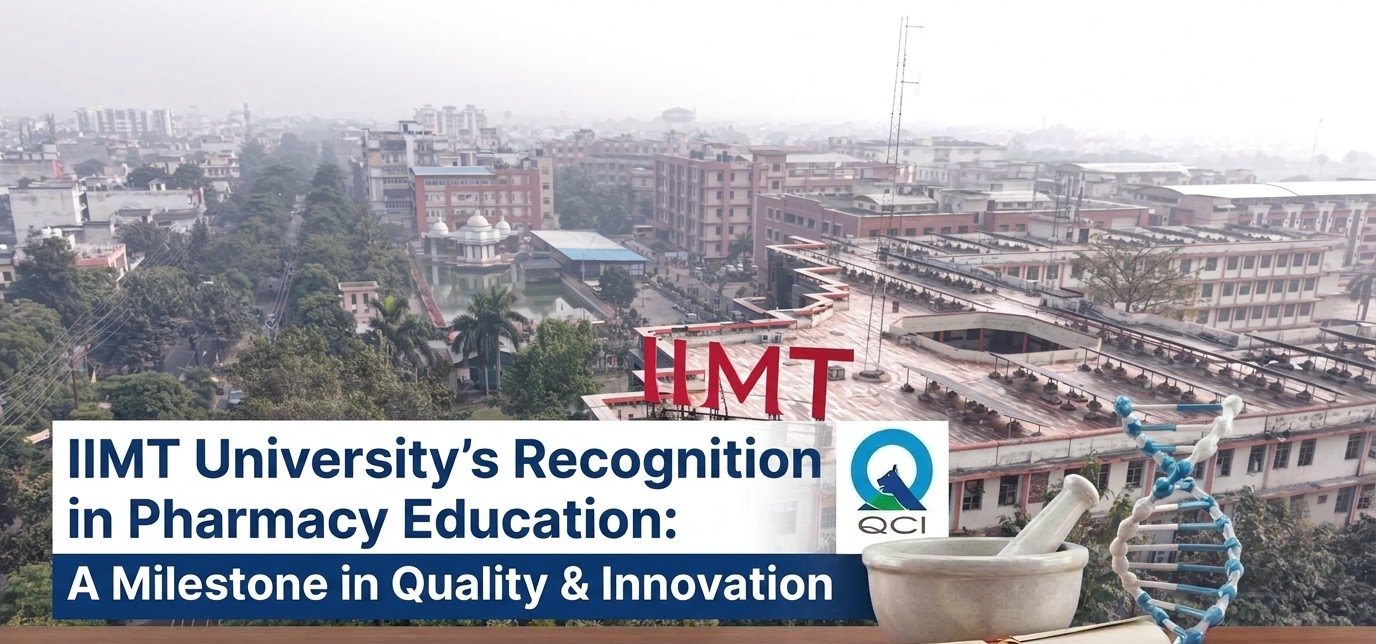
Pharmacy education in India is under more scrutiny than ever regulatory bodies, industry recruiters, and students alike are demanding measurable proof of quality, not just marketing claims. Against that backdrop, IIMT University has reason to celebrate: a prestigious recognition from the Quality Council of India (QCI) has placed it as the #1 Private University in Uttar Pradesh for pharmacy education, and #4 overall among all government and private pharmacy institutions in the assessment. For a university evaluating its place among the region’s pharmacy education leaders, this milestone is worth unpacking in detail.
What the QCI Recognition Actually Means
The Quality Council of India is a nationally recognized body established to build and maintain quality benchmarks across sectors, including higher education. Being recognized by QCI isn’t a symbolic gesture, it reflects an institution’s performance across parameters like infrastructure, faculty quality, curriculum design, research output, and student outcomes. For IIMT University to be ranked #1 among private universities in Uttar Pradesh, and #4 across the combined pool of government and private institutions, signals that its pharmacy programs are competing credibly with some of the most established names in the field not just other private universities, but government institutions with decades of legacy funding and infrastructure behind them.
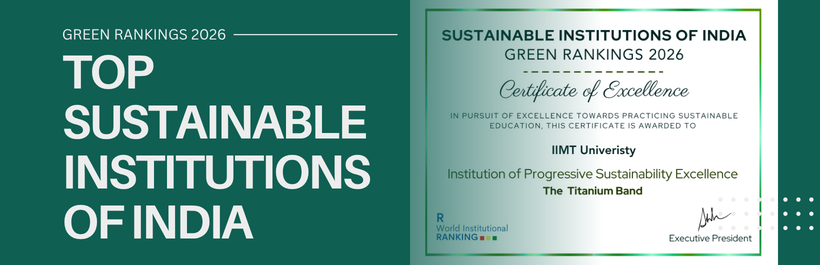
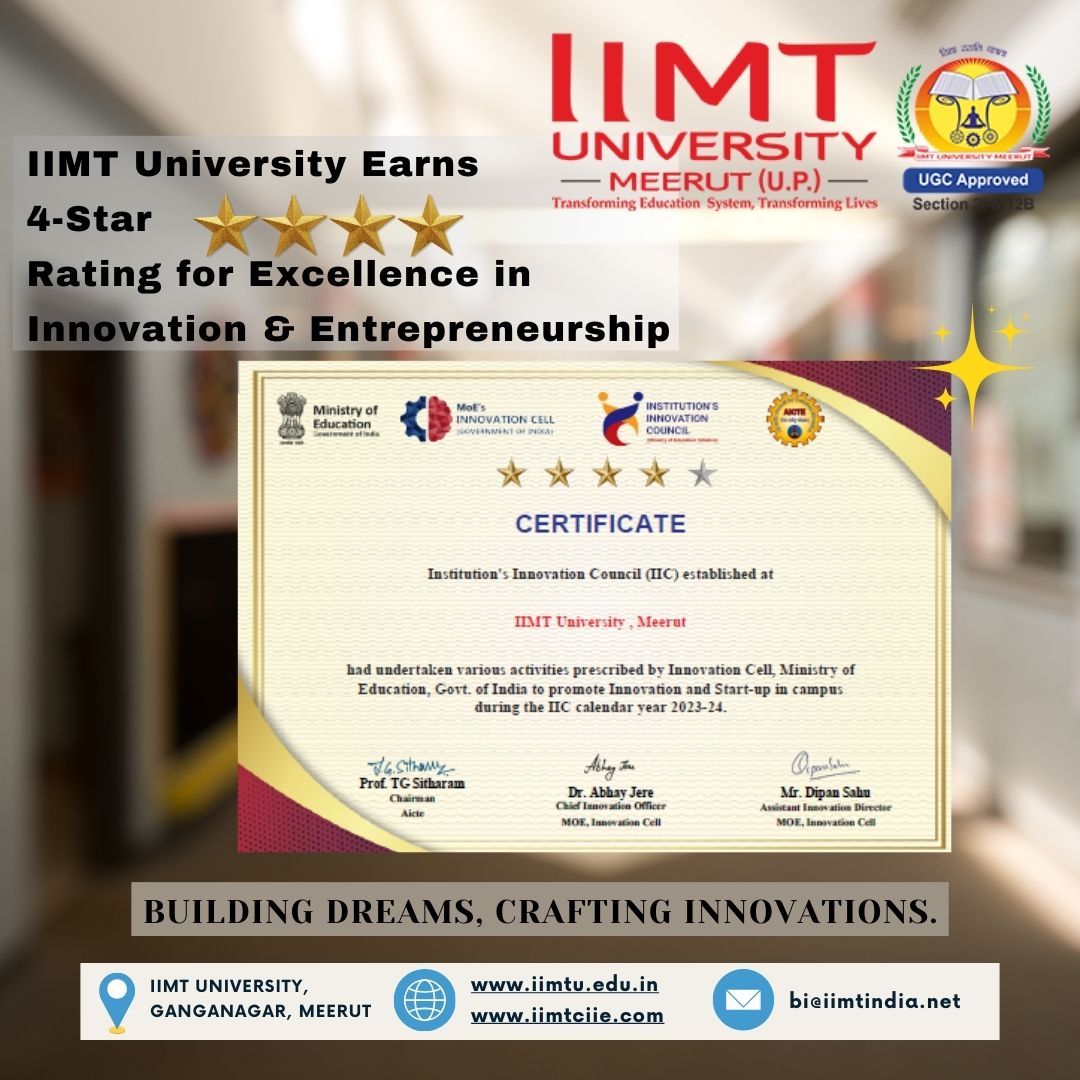
This recognition arrives alongside IIMT University‘s broader accreditation profile, including its NAAC ‘A’ Grade status and multiple 2026 rankings across innovation and academic quality reinforcing that this isn’t an isolated achievement but part of a consistent pattern of institutional performance.
Why This Matters If You’re Choosing a Pharmacy Program
For prospective students, a ranking like this should influence a very practical decision: which pharmacy program actually prepares you for licensure, clinical practice, or an R&D career, rather than just handing you a certificate. As a top university in UP for pharmacy education, IIMT University’s recognition suggests stronger lab infrastructure, faculty depth, and curriculum alignment with Pharmacy Council of India (PCI) standards all factors that directly affect how job-ready a graduate is at the end of the program.
B.Pharm Course Details and Admission
The Bachelor of Pharmacy (B.Pharm) remains the most common entry point into the profession. Key b pharm course details to know:
- Duration: 4 years (8 semesters), as per PCI regulations
- Eligibility: 10+2 with Physics, Chemistry, and Biology/Mathematics as core subjects, typically with a minimum aggregate score
- Curriculum focus: Pharmaceutics, Pharmacology, Pharmaceutical Chemistry, Pharmacognosy, and mandatory industrial/hospital internships
- Career paths: Community and hospital pharmacy, pharmaceutical manufacturing, drug regulatory affairs, and clinical research
B.Pharm admission at IIMT University follows a straightforward process eligibility verification, merit-based or entrance-test shortlisting, counseling, and seat confirmation making it one of the more accessible options among B.Pharma colleges in UP for students who want quality training without a hyper-competitive entrance barrier.
D.Pharm Course Details
For students seeking a faster, more technical entry into the field, the Diploma in Pharmacy (D.Pharm) is a common alternative. Relevant d pharm course details:
- Duration: 2 years, followed by a mandatory internship period before registration as a pharmacist
- Eligibility: 10+2 with Physics, Chemistry, and Biology/Mathematics
- Focus areas: Pharmaceutics, pharmaceutical jurisprudence, and hospital/community pharmacy practice
- Outcome: Eligibility to register as a pharmacist with the State Pharmacy Council after internship completion
The dpharm route is often chosen by students who want to enter the workforce sooner, with the option to pursue a lateral B.Pharm admission later if they choose to continue their education.
M.Pharm: The Next Step for Specialization
For graduates aiming at research, academia, or specialized clinical roles, an M.Pharm degree is the natural next step, typically offering specializations in Pharmaceutics, Pharmacology, Pharmaceutical Chemistry, or Quality Assurance. When evaluating the best M.Pharm colleges in India, students should look closely at research infrastructure, faculty publication record, and industry tie-ups all areas where QCI-recognized institutions like IIMT University are increasingly competitive, given the same accreditation strength that underpins their undergraduate programs.
A Milestone That Reflects Broader Institutional Momentum
This pharmacy education recognition doesn’t exist in isolation it’s consistent with IIMT University’s wider positioning as a top university in UP, backed by NAAC ‘A’ accreditation, global innovation rankings, and a placement network connecting graduates with over 2,500 recruiters across sectors. For a b pharma college in UP to earn a #4 national ranking alongside government institutions with far longer histories is a meaningful signal of where the university’s investments in labs, faculty, and curriculum design are paying off.
Final Thoughts
IIMT University’s QCI recognition in pharmacy education is more than a certificate to display it’s a data point that should genuinely factor into how prospective B.Pharm, D.Pharm, and M.Pharm students evaluate their options for 2026-27 admissions. As pharmacy education in India continues to professionalize and tighten its quality benchmarks, institutions that can back their claims with independent, credible recognition like IIMT University has now done are the ones worth taking seriously.