It’s one of the most common questions BCA students ask: “Can I really become an AI engineer without a B.Tech?” The honest answer is yes, you can, but it takes deliberate planning. AI hiring leans heavily on demonstrable skills: coding, math, data handling, and real projects. A BCA gives you a strong starting point in programming and computer applications. What you build on top of it decides how far you go. If you’re comparing the best bca course options with this goal in mind, here’s a realistic roadmap.
Is BCA Enough to Become an AI Engineer?
BCA alone won’t make you an AI engineer, but it can be the foundation. Many AI and machine learning roles list a B.Tech, M.Tech, MCA, or related degree as a preference, and some employers prefer postgraduate credentials for research-heavy roles. However, plenty of companies hire based on skills, portfolios, and certifications, especially for applied ML, data, and AI engineering roles. The practical path is a strong BCA, serious self-driven skill-building, and often a postgraduate step such as an MCA in AI and ML or a data science master’s.
BCA Course Details: What You Study
Understanding the bca course details helps you see where AI skills fit in:
- Duration: 3 years (6 semesters)
- Eligibility: 10+2 from a recognized board, with minimum marks set by each university
- Core subjects: programming (C, C++, Java, Python), data structures, database management, operating systems, computer networks, web technologies, and software engineering
- Electives and specializations: cloud computing, cyber security, data science, and AI-related topics depending on the college
- Practical work: labs, mini-projects, and a final-year project
The more your program includes cloud, data, and AI content, the shorter your learning path to an AI role.
The Skills You Need to Become an AI Engineer
- Python programming: the main language for AI and ML
- Mathematics for ML: linear algebra, probability, statistics, and basic calculus
- Data skills: SQL, data cleaning, and visualization
- Machine learning fundamentals: regression, classification, clustering, and model evaluation
- Deep learning: neural networks, computer vision, and natural language processing
- Generative AI and APIs: working with large language models and AI services
- Cloud and deployment: deploying models using cloud platforms, plus MLOps basics
- Software engineering habits: Git, testing, and clean, collaborative code
A Year-by-Year Learning Path
Year 1 – Foundations. Master Python and core programming. Refresh school-level math and start learning statistics. Build small projects such as a calculator or data tracker.
Year 2 – Data and ML basics. Learn data structures, databases, and SQL. Start machine learning with libraries like scikit-learn. Complete two or three beginner projects, such as price prediction or spam detection, and publish them on GitHub.
Year 3 – Specialize and prove it. Study deep learning, explore cloud AI services, and build one or two substantial projects, ideally solving a real problem. Earn a recognized cloud or ML certification and complete an internship if you can.
After BCA – Choose your route.
- Enter the industry as a junior data analyst, ML intern, or AI developer and grow on the job
- Pursue an MCA in AI and ML or a data science master’s to deepen theory and strengthen your profile
- Keep building open-source and portfolio work, because projects speak louder than degree titles
How to Choose Among BCA Colleges in India
When evaluating bca colleges in India, look for:
- Modern specializations in cloud, cyber security, data, or AI, not just a generic syllabus
- Hands-on labs and projects with real tools
- Industry certifications built into the program
- A path to postgraduate study on the same campus
- Placement and internship support with technology employers
How IIMT University Helps BCA Students Move Toward AI
IIMT University, Meerut, offers a three-year BCA with multiple tracks, including a general BCA, BCA in Cloud and Cyber Security, and a BCA with Google Cloud Specialization. The Google Cloud track integrates Google Cloud training and certification, covering cloud architecture, Google Cloud Platform services, serverless computing, and AI APIs, which are exactly the practical skills AI engineers use to deploy real systems.
Students who want to go deeper can continue to the university’s two-year MCA in Artificial Intelligence and Machine Learning, so the whole BCA-to-AI journey can happen on one campus. The university also has an innovation ecosystem, including a 4-Star rating under the Ministry of Education’s Institution’s Innovation Council framework and the IIMT Business Accelerator Foundation, whose focus areas include artificial intelligence and IoT. Placement support runs through the Corporate Resource & Interface Centre (CRIC), which connects students with 2,500+ recruiters.
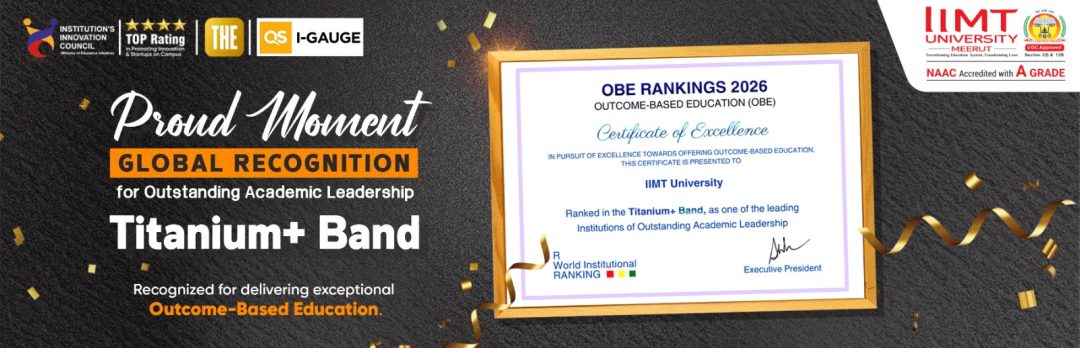
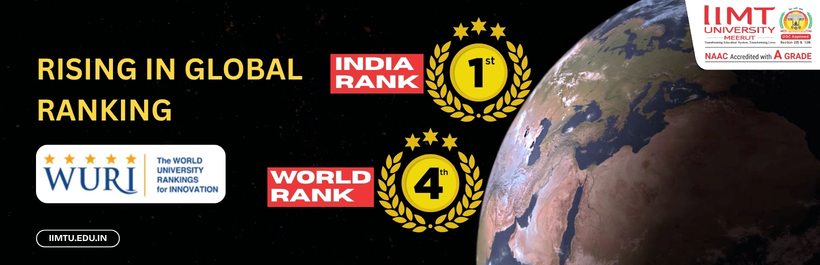
With NAAC ‘A’ Grade accreditation and a strong run of 2026 recognitions, IIMT University is increasingly discussed as a top private university in India.
Final Thoughts
You can become an AI engineer after BCA, and many people do, but the degree is the starting line, not the finish. Choose a program with modern specializations, build projects from day one, certify your skills, and consider an MCA in AI and ML if you want a stronger credential. The best BCA course for this goal is the one that keeps you building.