Chemistry quietly powers a huge part of modern life: medicines, batteries, fertilizers, polymers, clean water, and the materials inside your phone. For B.Sc. graduates who want to go deeper than the undergraduate syllabus, an M.Sc. Chemistry degree opens doors to research, industry, and teaching. If you’re planning for the 2027 session, here’s a clear guide to who can apply, how the process works, and how to choose where to study.
Why Choose an M.Sc. in Chemistry?
An M.Sc. Chemistry program builds advanced understanding across organic, inorganic, physical, and analytical chemistry, along with spectroscopy, instrumentation, and laboratory research skills. The career paths are broad:
- Pharmaceutical and chemical industries: quality control, process development, and R&D
- Environmental management: pollution monitoring, water testing, and sustainability roles
- Materials and energy: polymers, batteries, and specialty chemicals
- Research and higher education: Ph.D. programs, CSIR-UGC NET, and teaching positions
- Government and public sector: laboratories, testing agencies, and competitive exams
For students who enjoy lab work and problem-solving, it’s a degree with both depth and range.
M.Sc. Chemistry Eligibility Criteria
Eligibility varies slightly by university, but the typical requirements look like this:
- A B.Sc. degree with Chemistry as a subject from a recognized university
- A minimum aggregate, often around 45% to 50% depending on the institution
- Final-year B.Sc. students can usually apply provisionally, subject to passing with the required marks
At IIMT University, the department’s published criteria specify a B.Sc. with at least 45% marks in a relevant subject, and the program runs for two years. Because rules can be revised between sessions, always confirm the current criteria on the official website before applying.
Application Process: Step by Step
The general MSC admission journey follows this sequence:
- Check eligibility against the university’s published criteria for your category.
- Register and apply online through the university’s admission portal. For IIMT University, applications are handled through its official admission portal at admission.iimtu.edu.in.
- Fill in academic details and upload documents (see the checklist below).
- Pay the application fee, if applicable, and submit the form.
- Selection: depending on the university and cycle, this may be based on merit in your qualifying degree and/or an entrance score such as CUET PG, followed by counseling where required.
- Document verification and fee payment to confirm your seat.
- Orientation and enrollment before classes begin.
Postgraduate sessions at many universities start around July, so applications commonly open earlier in the year. IIMT University’s listed application deadline for the 2026 session was 30 June, which is a useful guide for planning, but check the portal for the exact 2027 dates.
Documents to Keep Ready
- Class 10 and 12 mark sheets
- B.Sc. mark sheets (all semesters or years available)
- Provisional or final degree certificate
- Valid photo ID such as Aadhaar
- Passport-size photographs and a scanned signature
- Category certificate, if applicable
- Entrance score card, if the admission route requires one
What to Look for in the Best MSc Colleges in India
When comparing the best MSC colleges in India for chemistry, don’t rely on name alone. Check:
- Laboratory infrastructure: modern instruments and regular practical sessions
- Faculty and research activity: active research and publication culture
- Curriculum relevance: coverage of analytical techniques, instrumentation, and applied chemistry
- Pathways forward: Ph.D. options, NET preparation support, and industry connections
- Overall institutional quality: accreditation, rankings, and student support
How IIMT University Supports M.Sc. Chemistry Students
IIMT University, Meerut, offers M.Sc. Chemistry through the Department of Chemistry in its School of Basic Sciences and Technology, as part of a wider M.Sc. portfolio that also includes Mathematics, Physics, Statistics, Biotechnology, Microbiology, and more. The university also offers a Ph.D. in Chemistry, so students who want to continue into research can do so on the same campus. Career directions highlighted by the department include environmental management and higher education.
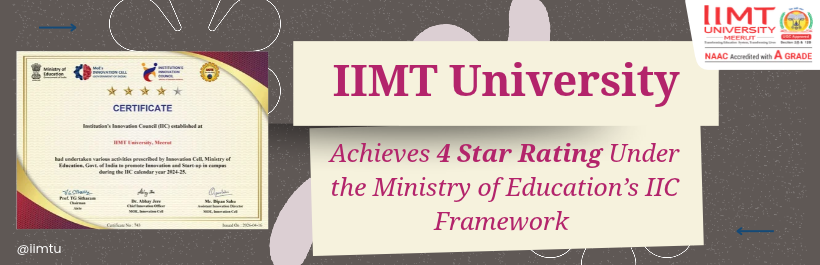
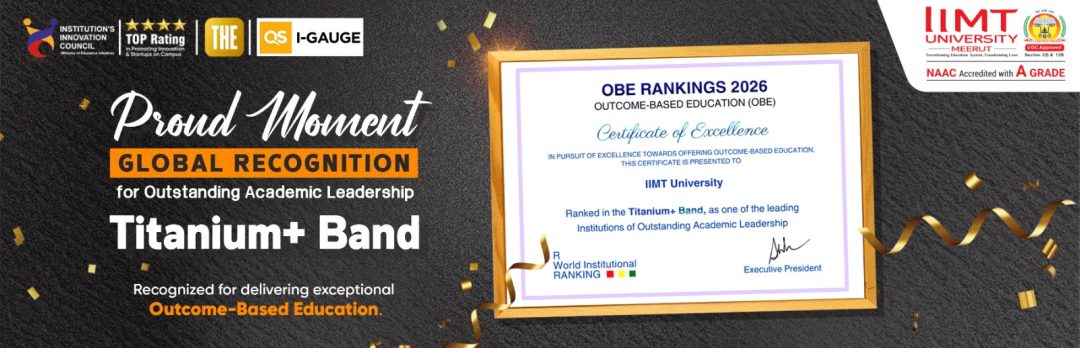
Beyond the classroom, the campus has a strong innovation culture. IIMT holds a 4-Star rating under the Ministry of Education’s Institution’s Innovation Council framework and secured 4th place globally in Entrepreneurial Culture and Ecosystem in WURI 2026. In THE Sustainability Impact Rankings 2026, it reported a place among the top 18 universities in India and No. 1 in Uttar Pradesh, which is relevant for students interested in green and environmental chemistry. Combined with NAAC ‘A’ Grade accreditation, these recognitions are why IIMT University is increasingly discussed as a top ranking university in India among private institutions.
Final Thoughts
An M.Sc. in Chemistry rewards curiosity and careful lab work, and the 2027 admission cycle is the right time to prepare: confirm your eligibility, gather documents early, and shortlist universities with strong labs and clear progression routes. Start your application well before deadlines, and you’ll give yourself the best chance of getting into the program that fits your goals.